Discover Korean Traditional Alcohol
Explore 1,188 traditional drinks from 543 breweries across Korea.
The most comprehensive English guide to Korean alcohol. Every drink, every brewery, one place.
Explore 1,188 traditional drinks from 543 breweries across Korea.
The most comprehensive English guide to Korean alcohol. Every drink, every brewery, one place.
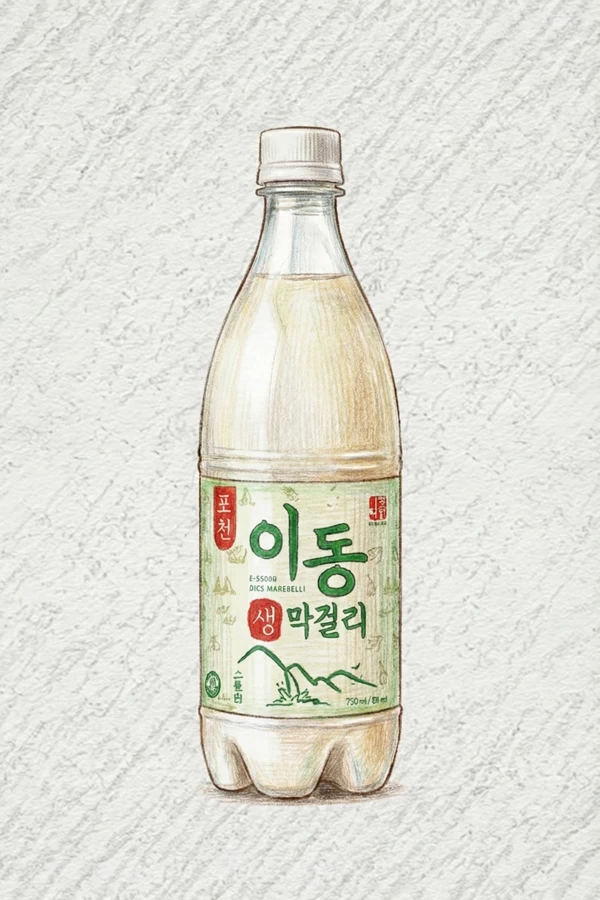
이동 생 쌀 막걸리
Idong Brewery in Pocheon, Gyeonggi-do, ferments a blend of polished white rice and puffed rice using ipguk (cultured rice koji) rather than traditional nuruk, which yields a lighter, more predictable fermentation curve. The result is a makgeolli where soft rice creaminess dominates the midpalate, edged by a candy-like sweetness that fades without residual heaviness. Because it is bottled fresh and unpasteurized, fine natural carbonation keeps each sip feeling textured and alive rather than flat. On the nose you get steamed rice and a faint yogurt tang; the first sip is pillowy and slightly effervescent before the finish dries out just enough to reset your palate. Compared to nuruk-fermented makgeolli at similar ABV, this one reads cleaner and more streamlined, trading funky depth for easy approachability. Pair it with crispy pajeon where the oil and scallion char need a creamy counterweight, or set it beside spicy kimchi jjigae to cool down the heat between spoonfuls. Late-night fried chicken with a dusting of garlic powder is another natural match — the rice sweetness tempers salt and grease without competing.
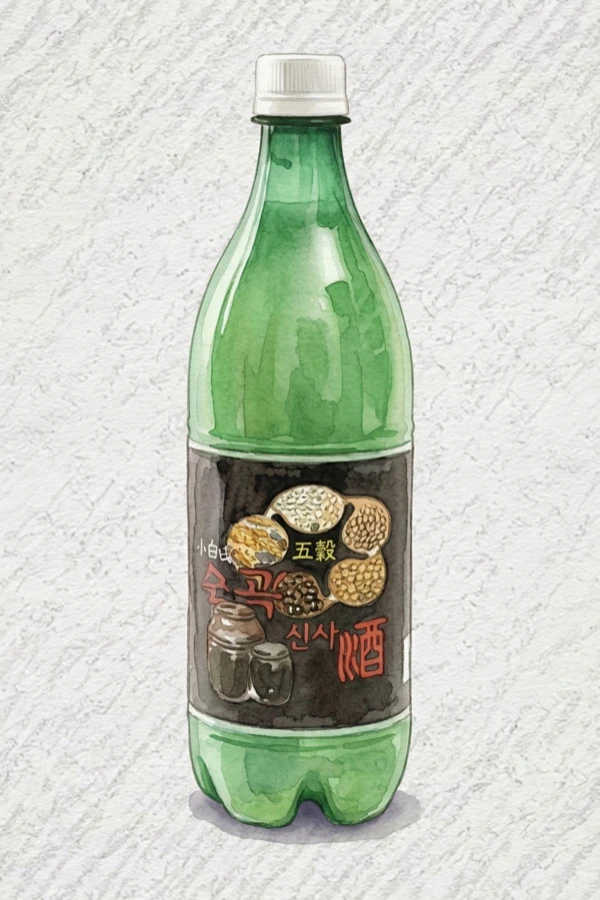
오곡 진상주
Daegang Brewery in Chungcheongbuk-do ferments five different grains — rice, wheat, barley, corn, and millet — to produce Ogok Jinsangju, a traditional brew whose name translates roughly to 'Five-Grain Tribute Wine.' Each grain contributes a distinct layer: rice provides the creamy base, wheat adds a bready softness, barley introduces a toasted dryness, corn lends subtle sweetness, and millet brings a slightly earthy, grassy note. At 7% ABV, it is approachable yet more complex than single-grain alternatives. The aroma recalls roasted grain tea (misutgaru) with a savory, almost brothy undertone. The first sip is smooth and medium-bodied, then transitions from gentle sweetness through toasted notes into a dry, lightly savory finish that encourages the next sip. Compared to rice-only makgeolli, this feels broader and more textured on the palate, with a longer, more interesting finish. It is a natural companion for banchan-heavy tables — the grain spectrum picks up flavors from seasoned vegetables, fermented sides, and grilled proteins without clashing. Try it with samgyeopsal or galbi, where the charred meat fat finds a complementary partner in the toasted barley and millet notes.
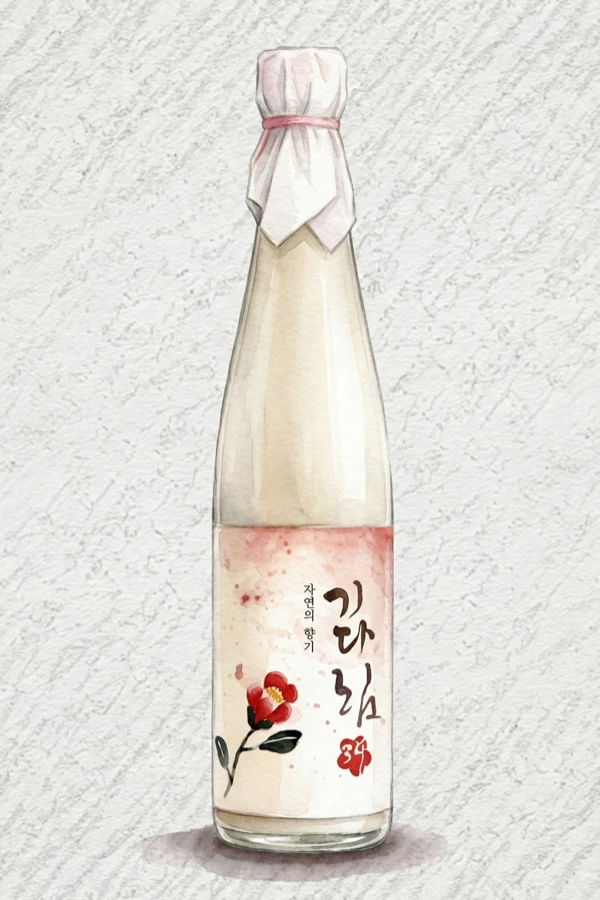
기다림 34
JK Craft in Busan's Dongnae district ferments domestic non-glutinous and glutinous rice with traditional grain starter (gokja) to create this 12% fruit-forward style. The aroma surprises with tropical lychee and pear blossom over a base of warm rice porridge. On the palate, a satiny body carries flavors of ripe Asian pear and a whisper of honey, finishing with gentle tannic grip and a floral lilt. The fruit character emerges naturally from the dual-rice fermentation rather than added fruit. Serve at 10-14°C, slightly below cellar temperature. Pairs elegantly with aged Gouda or Brie where rice sweetness echoes dairy cream, or with hwajeon flower rice cakes as a traditional Korean tea-time pairing.
양지백주
Yangji Sool Gotgan in Yangyang, Gangwon-do brews this cheongju (clear rice wine) at 15% ABV using domestic rice, nuruk, and yeast — then filters to crystal clarity. The aroma is restrained yet elegant: white flower, polished rice, and a hint of green apple. On the palate, the body is silky and medium-weight with precise sweetness that never overwhelms, balanced by a fine mineral thread and subtle dried-herb complexity. The finish is long, clean, and slightly warming. Serve chilled at 8-12°C in a small cup to appreciate the clarity. Exceptional with hanjeongsik multi-course Korean dining, steamed sea bream (domi-jjim), or delicate vegetable tempura where its refined profile enhances without masking.

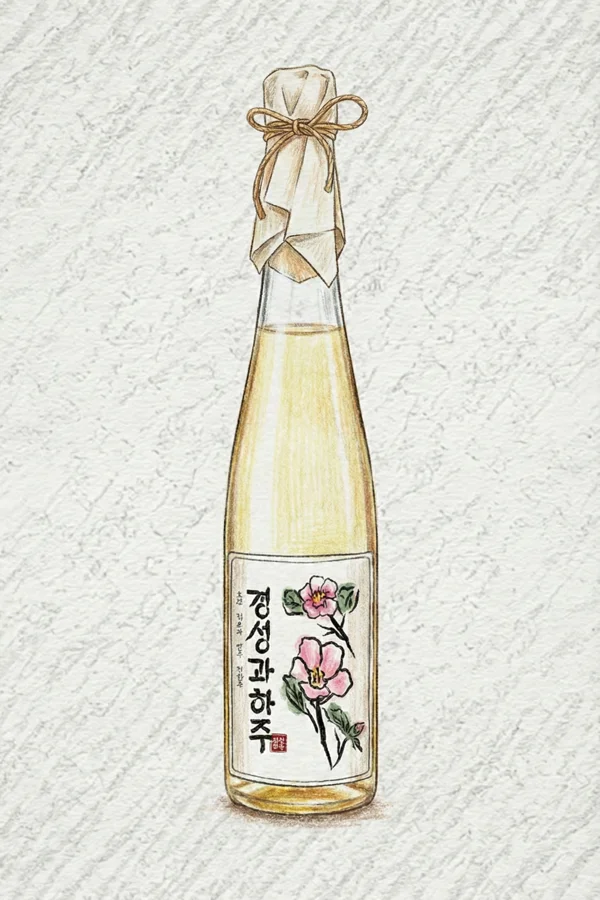
경성과하주
Gyeongseong Gwahaju is a 20% spirit from Gyeonggi-do that bridges traditional yakju and modern distillation, built on Yeoju glutinous rice with nuruk and a rice distillate from Gyeonggi grain. The 'gwahaju' (過夏酒) name references summer-enduring wines of the Joseon era — spirits strong enough to survive warm months without spoiling. The nose is direct and slightly sharp, with raw rice grain, white pepper, and a faint rubbing alcohol edge that softens after a moment in the glass. On the palate, the rice distillate provides a clean, linear backbone while the nuruk-fermented base adds a brief, honeyed roundness at the midpalate. The finish is dry and warming, with a lingering white pepper tingle. Designated a 2021 Visiting Brewery. Serve at room temperature (16-18°C) with yangnyeom-galbi (marinated grilled short ribs), where the sweet soy-garlic marinade is sliced cleanly by the spirit's dry bite, or sip it alongside jeotgal (salted fermented seafood), where the intense brine calls for alcohol strength.
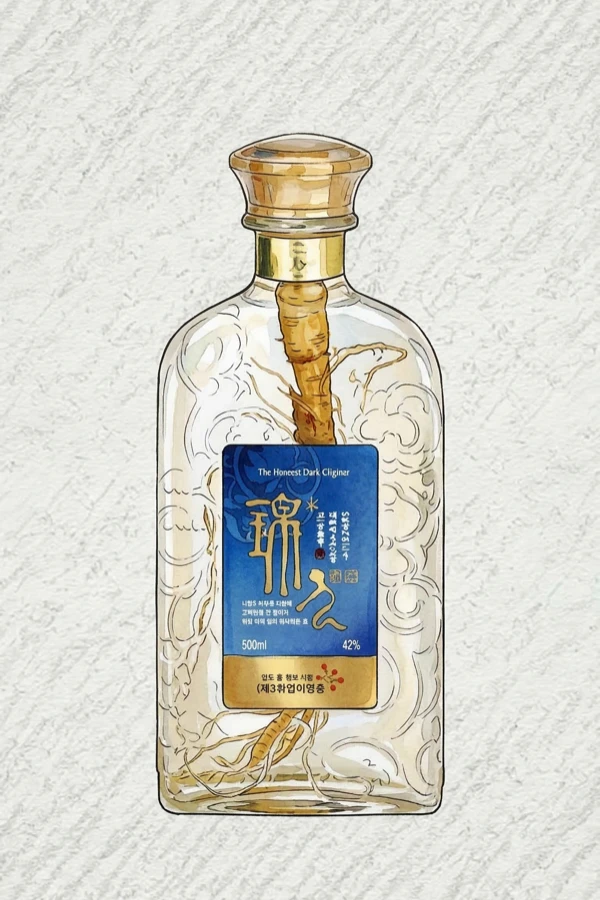
금산인삼주 수삼 500
Geumsan Ginsengju Susam 500 is a 43% ABV ginseng spirit from Chungcheongnam-do that places fresh Korean ginseng (susam) at the center of its identity. Crafted by Korean Food Master No. 2, Kim Chang-su, in the heart of Korea's ginseng capital, the spirit treats ginseng not as a supplement but as a primary flavor driver. The nose is deeply earthy — fresh ginseng root dominates with its distinctive soil-and-bark character, accompanied by a subtle grain sweetness from the rice base and a faint, almost mushroom-like umami depth. On the palate, the body is medium-full with a dense, slightly viscous texture. The fresh ginseng character is assertive and multi-layered: an initial earthy bitterness gives way to a complex sweetness that feels root-like rather than fruity, followed by a peppery warmth in the back palate. The rice backbone provides structural clarity beneath the ginseng's intensity, preventing the spirit from becoming purely medicinal. The mid-palate shows a distinctive mineral quality from the region's terroir. The finish is long and deeply warming, with ginseng's bitter-sweet duality persisting and a dry, earthy close. Its 2011 Korea Sool Awards recognition confirms the craft. At 500ml, serve at room temperature alongside nuts, dried fruit, or rich protein dishes where the ginseng depth can match the food's intensity.
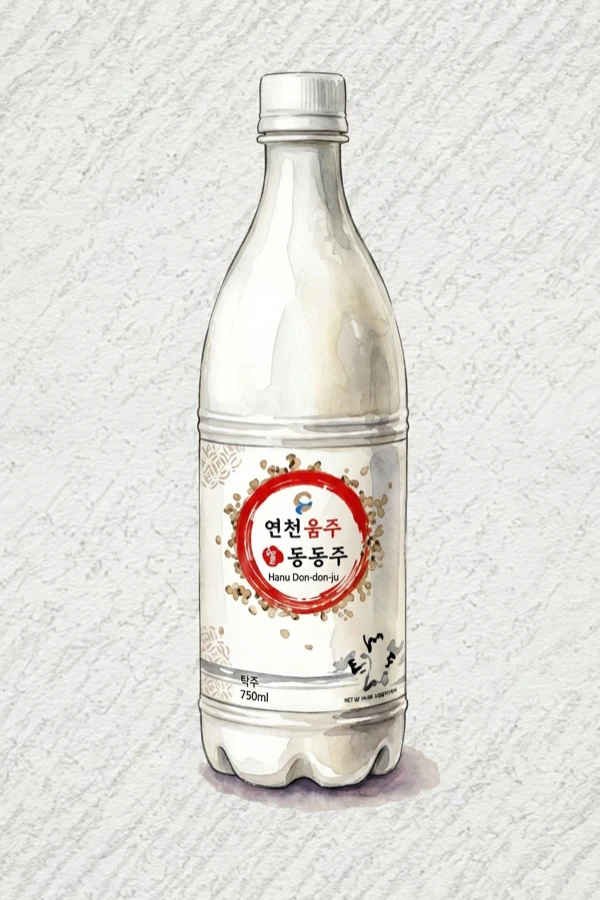
연천 율무 동동주
Yeoncheon Brewing takes locally grown yulmu (Job's tears) from the fertile plains near the DMZ border area and layers it into a rice fermentation driven by traditional nuruk and yeast. At 14% ABV, this is far removed from casual session makgeolli — the alcohol provides a warm, persistent backbone that carries the grain flavors longer across the palate. The yulmu addition is what sets it apart: it contributes a toasted, almost barley-tea nuttiness alongside a subtle savory edge that you would not find in a pure rice brew. Pour it and the aroma opens with cooked grain and a whisper of sourdough from the nuruk. The first sip is surprisingly plush given the strength, with a rounded mouthfeel that belies its punch. Midpalate, the yulmu nuttiness emerges clearly, and the finish carries mild bitterness alongside lingering warmth. Compared to standard 6% makgeolli, this drinks closer to a rustic farmhouse ale in weight and intention. Serve it lightly chilled — around 8-10°C — alongside haemul pajeon, where the seafood oil needs a drink with enough structure to stand up to it, or with smoky dwaeji galbi straight off the grill.
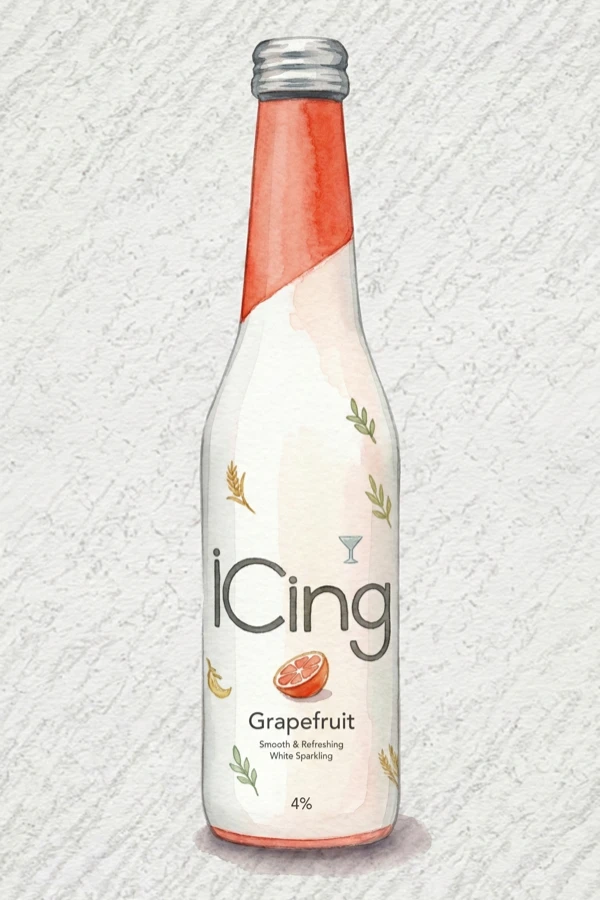
아이싱 자몽
Guksundang Brewery, one of Gangwon-do's larger traditional producers, created Aising Jamong as a low-ABV, fruit-forward option that introduces grapefruit extract into a rice-fermented base. At 4% ABV in a slim 350ml can, it is positioned firmly as a casual, single-serving drink — closer to a flavored seltzer in occasion than a traditional pour meant for lengthy meals. The grapefruit component brings a clean citrus bitterness that is more pith than juice, providing a dry counterpoint to the rice base's inherent softness. The aroma opens with pink grapefruit peel and a whisper of rice starch. First sip: the citrus bitterness arrives quickly, then the rice fermentation smooths it into a rounded midpalate before the finish dries out with a refreshing snap. Compared to other fruit-infused traditional drinks, this reads lighter and more carbonated in feel, less syrupy. It works well as a palate cleanser between bites of samgyeopsal or spicy tteokbokki. You could also pair it with light bar snacks — dried squid, peanuts, or cheese sticks — where the grapefruit lift keeps things lively without overwhelming the snack flavors.
기다림 16
The most visually striking of JK Craft's Busan lineup, Gidarim 16 uses Korean black rice alongside glutinous rice and gokja starter to produce a jewel-toned purple-crimson brew at 9% ABV. The aroma evokes mulberry jam, dark cherry, and toasted rice with earthy depth from the black rice hull anthocyanins. On the palate, the body is plush and slightly viscous, with layered flavors of boysenberry, dark chocolate bitterness, and sweet rice. The finish is long, lightly tannic, and tinged with dried cranberry. Serve at 10-14°C. Outstanding with blue cheese where the berry-fruit intensity stands up to pungent funk, or dark chocolate truffles for a luxurious dessert pairing.

연천 연주
Yeoncheon Brewing in Gyeonggi-do strips this 12% cheongju to its core — domestic rice, nuruk, and pure water — then lets patient fermentation do the shaping. The nose opens with polished white rice and a whisper of pear blossom, delicate enough that you might miss it if you rush past. On the palate, the body is medium-light and exceptionally clean, with a fine-grained texture that glides rather than coats. Midpalate, a gentle cereal sweetness appears, closer to the fragrance of freshly milled grain than to anything sugary, and the finish resolves into a dry, mineral-tinged exit that resets the palate with each sip. At 500ml and 12%, it is sized and strengthened for a focused pairing with grilled dorado or gwamegi, where the fish oils need a crisp, neutral partner. It also excels alongside steamed gyeran-jjim, where the egg custard's subtle richness meets the drink's lean clarity, and through a multi-course hanjeongsik where it stays out of the way of each dish's own flavors.
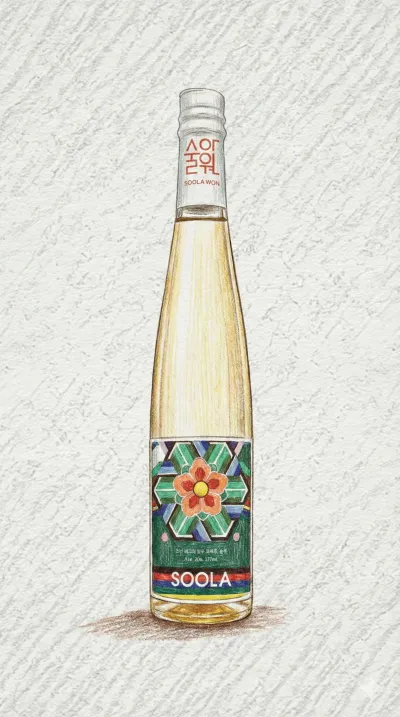
술아 순곡주
Sula Sungokju from Gyeonggi-do blends domestic glutinous rice and nuruk with distilled spirit and purified water for a 20% pour that emphasizes poise over punch. The addition of distilled liquor elevates the ABV without the rough edges of harsh fermentation, creating a spirit that drinks closer to 16-17% in terms of perceived heat. The nose is quiet — steamed rice, a whisper of alcohol vapor, and a trace of roasted sesame that appears and vanishes. The palate is sleek and almost oily, with a midpalate of toasted grain and a dry, slightly numbing finish that builds warmth rather than burning. The 375ml format makes it a focused pour for a single course. Serve at room temperature (16-18°C) with nakji-bokkeum (stir-fried octopus in gochujang), where the drink's numbing warmth complements the dish's fiery sauce, or with yukhoe (Korean beef tartare), where the oily texture mirrors the raw beef's silkiness.
진심홍삼인삼주 38%, 19%
Jinsim Red Ginseng Liquor is produced in Jeollabuk-do by Nongtaepyeong Brewing in two expressions — 38% and 19% ABV — both built on domestic rice infused with jicho root (Lithospermum erythrorhizon). Despite its name referencing red ginseng, the ingredient list centers on jicho, which contributes a deep herbal profile with earthy spice and subtle bitterness. The 38% version won the top honor at the 2011 Korea Traditional Liquor Awards in the general distilled spirit category and followed up with an encouragement award in 2012, demonstrating consistent recognition across vintages. The dual-strength offering allows drinkers to choose between a contemplative, spirit-forward experience (38%) and a more approachable, food-friendly session (19%).
행운 생유자 동동주
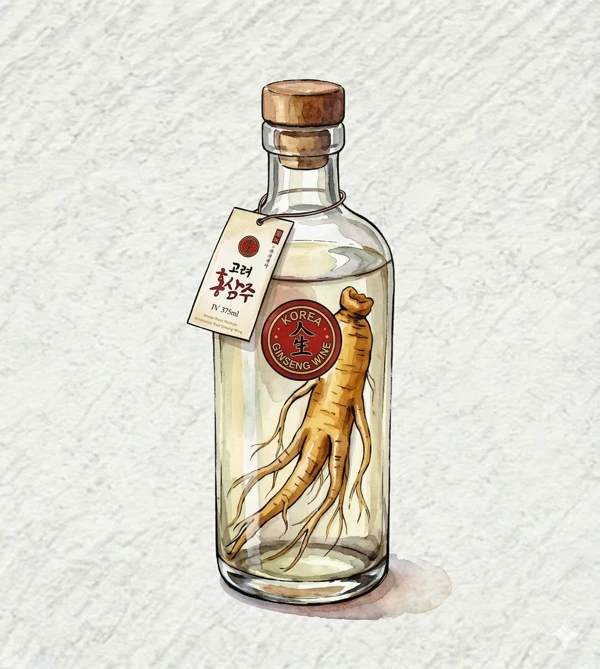
Seongpo Brewery in Gyeongsangnam-do infuses domestic rice fermentation with yuzu juice, producing a dongdongju that opens with an unmistakable citrus burst before settling into a soft grain base. The ingredient list reveals wheat flour and starch syrup alongside rice, broadening the body, while a touch of gardenia (chija) tints the liquid a warm gold that makes it visually striking in the glass. At 6% ABV it drinks like a session-weight spritzer — the yuzu aromatics hit bright and immediate on the nose, recalling fresh peel rather than candy. The first sip delivers tangy citrus over a pillowy rice texture, and the finish tapers with mild lactic acidity that keeps it refreshing rather than cloying. Compared to plain rice dongdongju, this one has noticeably more lift and a shorter, crisper finish. It pairs beautifully with vegetable tempura or hobakjeon (zucchini pancakes), where the yuzu acidity cuts through frying oil. Tangy kkakdugi alongside it creates a citrus-meets-ferment echo that is surprisingly harmonious.
바랑 탁
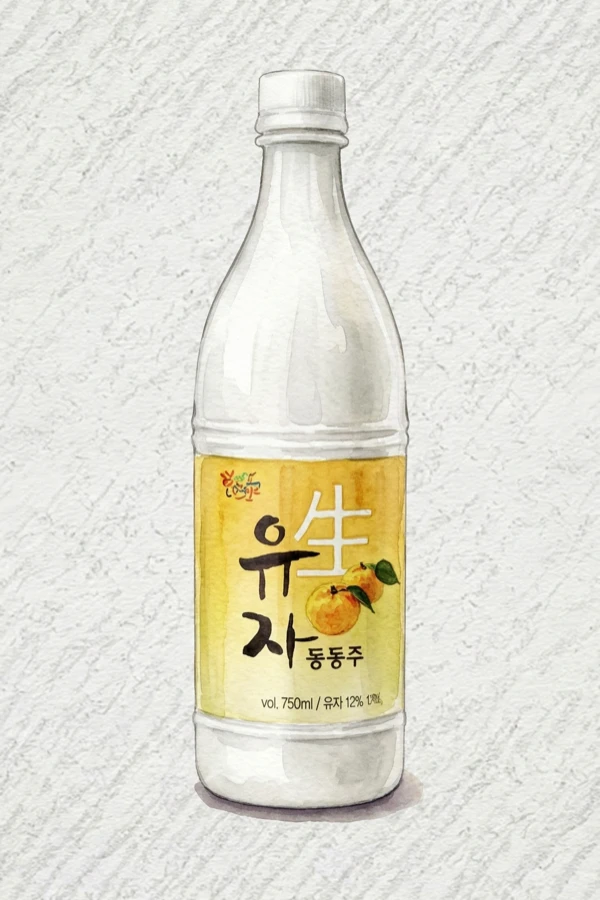
Geumgyedang Brewery in Gyeongsangbuk-do crafts Barang Tak by combining domestic glutinous rice, non-glutinous rice, nuruk, and wheat flour, then fermenting to a substantial 15% ABV. This dual-rice approach is a deliberate textural strategy: the glutinous rice provides thick, coating viscosity, while the non-glutinous rice contributes a cleaner grain backbone, and the wheat flour adds a bready softness. The 375ml bottle is unusually small for traditional Korean alcohol, signaling that this is meant for careful, measured drinking rather than communal pouring. The aroma is complex for a takju — layered grain depth, a hint of chestnut flour, and the warm, earthy signature of nuruk at work. The first sip reveals remarkable smoothness despite the high ABV; the dual-rice body absorbs the alcohol's heat, making it taste less fiery than 15% would suggest. Midpalate, the flavors unfold gradually: a toasted grain note from the wheat flour, a subtle bittersweet edge from the nuruk, and a background sweetness from the glutinous rice. The finish is long and gently drying, with warmth that settles rather than burns. Compared to lighter makgeolli, this is in the territory of barley wine or strong Belgian ale in terms of sipping occasion. Pair it with charcoal-grilled hanwoo beef or galbi, where the high-fat marbling calls for a drink with matching density. It also complements jangajji (pickled vegetables) whose vinegar and soy base echoes the drink's earthy-sweet complexity.
심술 10
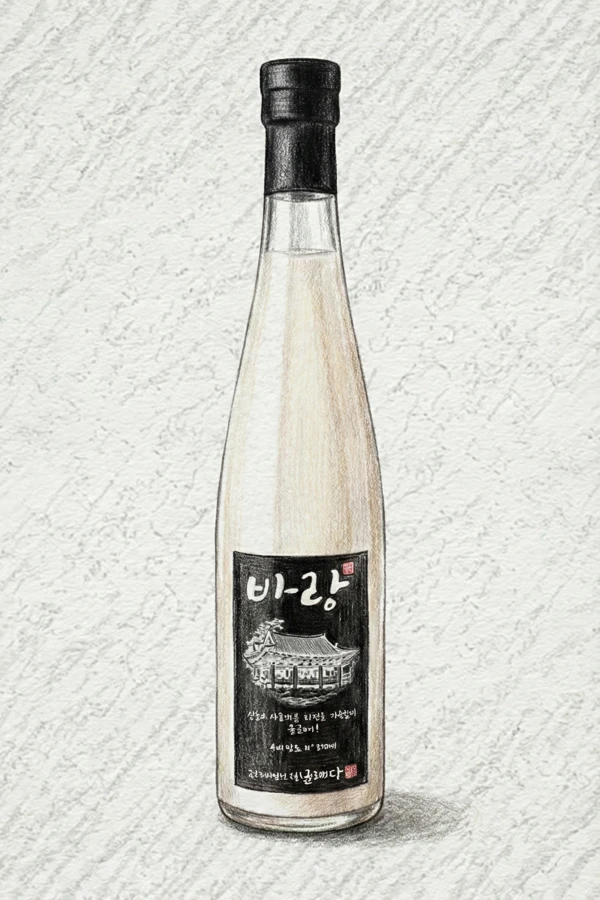
Simsul 10 is a sparkling fruit-style drink from Gyeonggi-do that leans into candied sweetness and aggressive carbonation at 10% ABV. The base mixes corn starch with fructose and white sugar, so expect a flavor profile closer to a hard soda than a traditional fermented brew — think green apple candy and cotton candy with a tart lactic acid backbone that keeps it from collapsing into pure sugar. The carbonation is injected rather than naturally produced, giving it a crisp, soda-like fizz that prickles sharply on the tongue. The finish is short and clean, with an artificial sweetener (acesulfame-K) echo that lingers just slightly. This is not a contemplative pour; it is a party drink, best served ice-cold at 3-5°C with dakgangjeong (crispy fried chicken bites), where the sweet glaze on both creates a playful mirror effect. It also works with tteokbokki, where carbonation cuts through the gochujang sauce's sticky heat.
신선주
Yongdusanjoeunsul Brewery in Chungcheongbuk-do loads this 16% cheongju with a striking botanical ensemble: apple, danggui (Korean angelica), goji berry, jujube, ginseng, cnidium, and pine needle all ferment alongside rice. The nose is layered and aromatic — pine resin arrives first, then warm spice from the danggui, followed by a candied apple sweetness that ties it together. On the palate, the body is medium-full with a waxy, almost honeyed texture. The herbal elements don't compete; instead, they create a slow-release complexity where each sip reveals a different accent. The finish is long, warming, and slightly balsamic, with ginseng's earthy root note anchoring the exit. As a designated Chungcheongbuk-do Intangible Cultural Heritage item (No. 4), it carries genuine provenance. Serve at 14-16°C alongside samgyetang, where the ginseng-chicken broth echoes the drink's own ginseng note, or with japchae whose sesame oil richness meets the pine-herbal lift.
술아 국화주
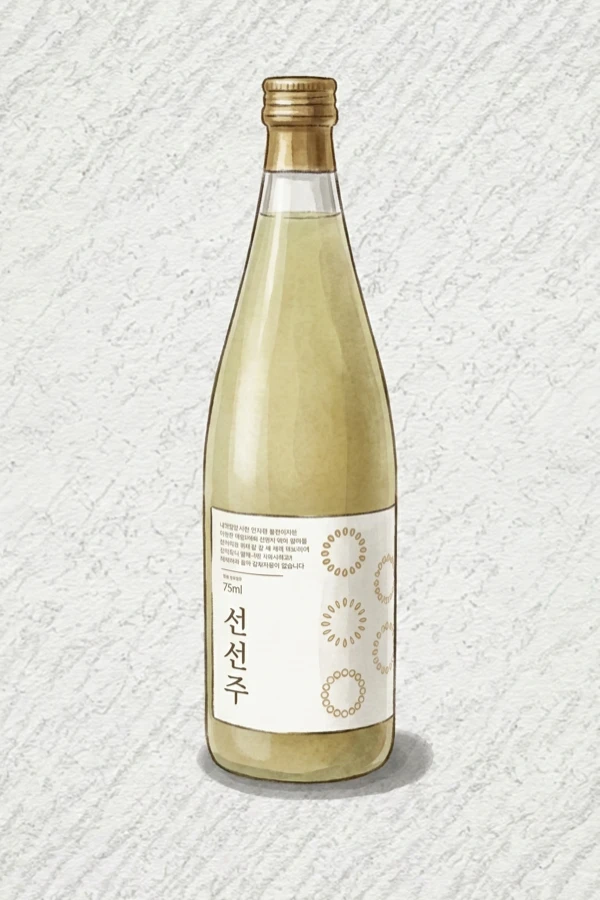
Sula Chrysanthemumju infuses dried chrysanthemum flowers into a base of Gyeonggi-do glutinous rice, nuruk, and distilled spirit, and the floral addition genuinely transforms the drinking experience. At 15% ABV, the nose opens with a distinct dried-flower herbiness — not perfumy or soapy, but more like the aroma of a traditional Korean herbal pillow, earthy and calming. The chrysanthemum's slight bitterness threads through the palate, providing a counterpoint to the glutinous rice's inherent sweetness. The texture is medium and smooth, with the distilled spirit adding clarity and lift. The finish lingers with a pleasant herbal dryness and a faint honey note from the rice. Serve at 10-13°C with saengseon-jjim (steamed fish in soy sauce), where the floral herbiness complements the savory braising without competing, or with dotori-muk (acorn jelly), where the jelly's neutral, slightly tannic profile lets the chrysanthemum note take center stage.
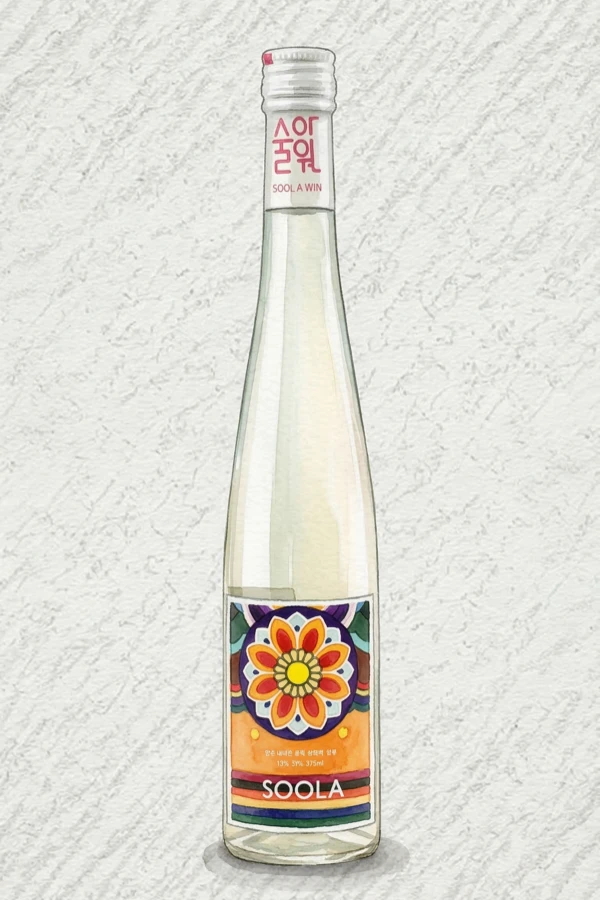
꿀샘 16
Honeysaem 16 is a 16% ABV honey-and-ginger liqueur from Chungcheongnam-do that positions itself at the intersection of traditional Korean mead traditions and modern craft sensibility. The base combines purified water, neutral spirit, sugar, and natural honey, then adds fresh ginger and citric acid for a spicy-sweet balance rarely achieved in single-note honey liqueurs. The ginger arrives not as a sharp burn but as a gentle warming undercurrent, threading through the rounded honey sweetness and lifting the finish. Produced by a brewery designated as a 2017 Visiting Brewery, the product reflects a deliberate approach where each ingredient plays a specific structural role — honey for body, ginger for aromatic complexity, and citric acid for brightness.
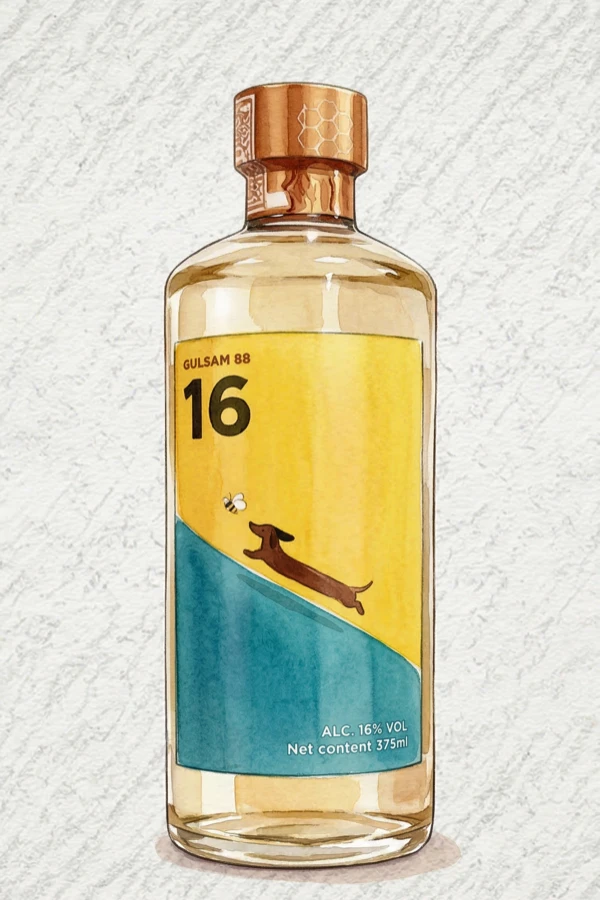
오산막걸리
Osan Brewing keeps the recipe stripped to essentials — domestic rice, guk (fermentation starter), yeast, and purified water — letting the grain character speak without distraction. This Gyeonggi-do makgeolli arrives in a compact 500ml bottle, sized for a solo meal or a quick pour for two. The aroma is gentle steamed rice with a faint chalky minerality, and the first sip lands soft and round with a rice-pudding sweetness that does not overstay. The body is medium-light, and the finish tapers cleanly without any lingering funk or excessive tang. It is the kind of farmhouse-honest bottle you reach for instinctively: nothing flashy, nothing hidden. Where fancier makgeolli might upstage a delicate dish, this one stays in its lane. It excels alongside bindaetteok (mung bean pancakes) where the earthy bean flavors need a neutral creamy partner, or with a simple spread of seasoned spinach, kongnamul, and other mild banchan. Even a bowl of ramyeon becomes more interesting with this on the side — the clean sweetness offsets the sodium and spice.

도깨비술 7
Dokkaebi Brewery in Danyang, Chungcheongbuk-do — a craft house themed around Korean goblin folklore — uses domestic non-glutinous rice, nuruk, and yeast to create this 7% entry-level expression. The aroma is gentle: fresh steamed rice with a faint floral yeast note. On the palate, the texture is polished and medium-light, with restrained sweetness that tilts slightly savory, and a clean mineral finish reminiscent of Danyang's limestone spring water. Serve at 8-12°C. Ideal with japchae where the glass noodle sweetness mirrors the rice base, or alongside bindaetteok where the crisp mung-bean crust plays off the smooth body.
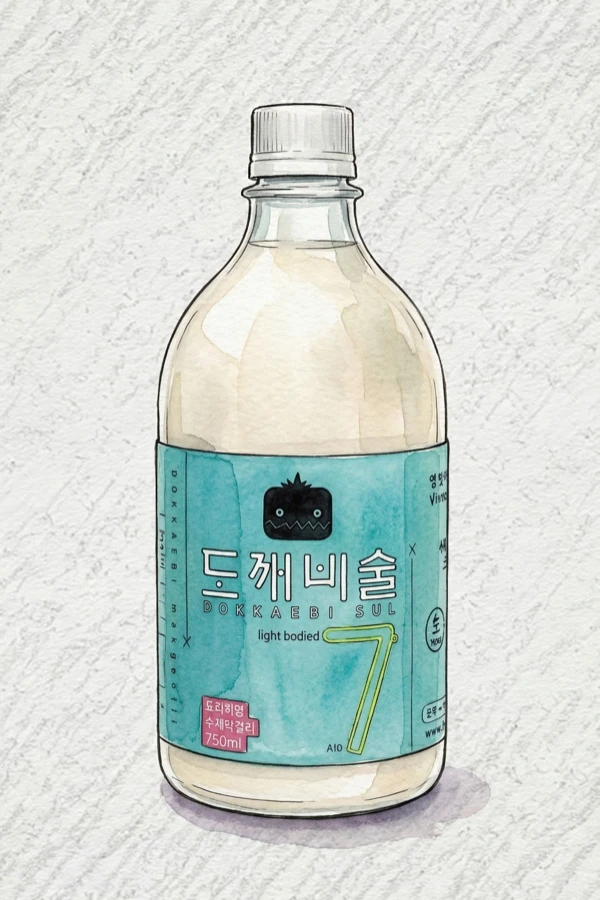
심술 7
The lighter sibling at 7% ABV, Simsul 7 dials down the alcohol but keeps the same sparkling candy-forward blueprint. Built on corn starch, fructose, and sugar with injected CO2, it tastes like fizzy melon soda crossed with a mild wine cooler — light-bodied, effervescent, and unabashedly sweet. The lactic acid edge is softer here than in the 10% version, making it smoother but also less interesting on its own. Where it excels is as a session drink at gatherings where nobody wants to think too hard about what they are drinking. Pour it over ice with hwachae-style fruit cubes for a DIY punch, or pair it straight with hotteok (sweet filled pancakes) for a dessert-course match where sugar meets sugar and nobody minds.
설련주
Seokjeonsangon Traditional Brewing in Gyeongsangbuk-do uses white lotus flowers, glutinous rice, non-glutinous rice, and nuruk to create a cheongju that is as quietly aromatic as it is technically demanding. The nose opens with a soft floral note — not perfumed rose but the understated, almost aquatic scent of lotus petals drying in the sun. On the palate at 16% ABV, the body is medium-full and composed, with a honeyed grain sweetness in the midpalate that the lotus element lifts rather than masks. The finish is long and gently warming, with a clean floral echo that fades gracefully. Designated as a Food Master product, it carries genuine artisanal lineage. Serve at 12-14°C with jeonbok-juk (abalone porridge) where the delicate sea flavor meets the lotus fragrance, or alongside a composed hanjeongsik where each course benefits from the drink's restrained elegance.
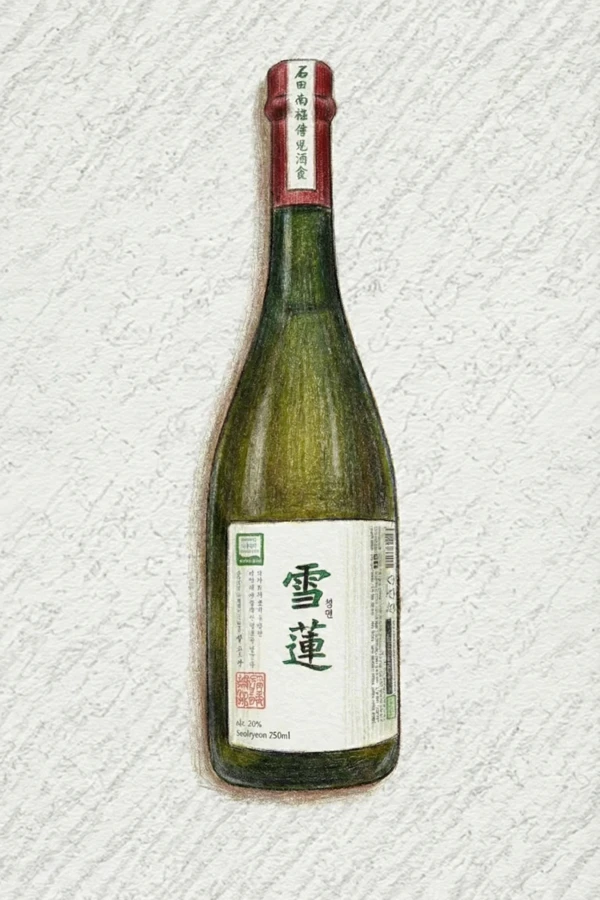
술아 연화주
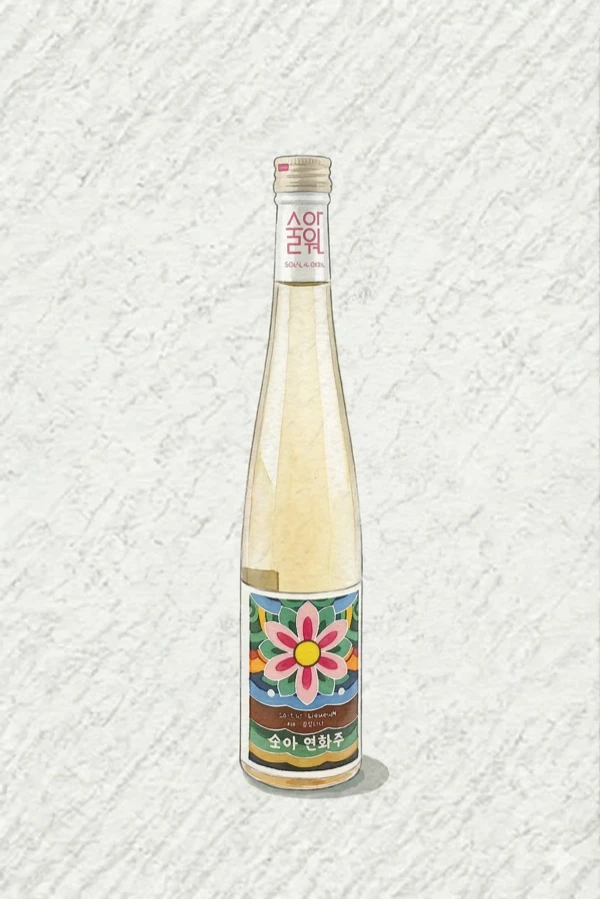
Lotus blossom takes the spotlight in Sula Yeonhwaju, a 15% Gyeonggi-do spirit where dried lotus flowers join domestic glutinous rice, nuruk, and distilled spirit. The lotus contributes a cleaner, more aquatic floral character than chrysanthemum — think water lily pond on a still morning rather than dried flower arrangement. The nose carries this watery freshness alongside a gentle rice sweetness. On the palate, the body is medium-light with a silky passage, and the floral note hovers delicately rather than asserting itself. The midpalate reveals a faint green-tea astringency, likely from the lotus, and the finish resolves into a dry, composed exit with a lingering vegetal cool. Serve at 8-12°C with yeongeun-jeon (lotus root pancake) for a thematic double-down on lotus, or with saeu-twigim (shrimp tempura), where the light body and aquatic floral lift complement the fried crunch without weighing it down.
티나(TINA)
Tina (TINA) is a 16% ABV strawberry liqueur from Jeollanam-do crafted by Traditional Food Grand Master No. 22, Yang Dae-su, a designation that recognizes lifetime mastery of a specific traditional food or beverage craft. The sole listed ingredient — domestic Korean strawberries — signals a minimalist production philosophy where the fruit must carry the entire flavor architecture. At 16%, the liqueur achieves enough body to support the berry's natural pectin-like viscosity while retaining the bright acidity that keeps strawberry expressions from becoming monotonously sweet. The bottle earned an Excellence Award in the 2019 Woorisool Quality Competition's miscellaneous spirits category, confirming that the restrained ingredient approach and the master's technique produce a result that competes at the national level. Jeollanam-do's mild southern climate and fertile plains provide favorable growing conditions for high-sugar strawberry varietals.