Korean Traditional Alcohol & Health: What You Should Know
An honest look at the health aspects of Korean traditional alcohol - from makgeolli probiotics and calorie comparisons to medicinal wines, with responsible drinking guidance.
Explore next
Bottles to compare
Move from the guide to product pages with ABV, tasting notes, and producer links.
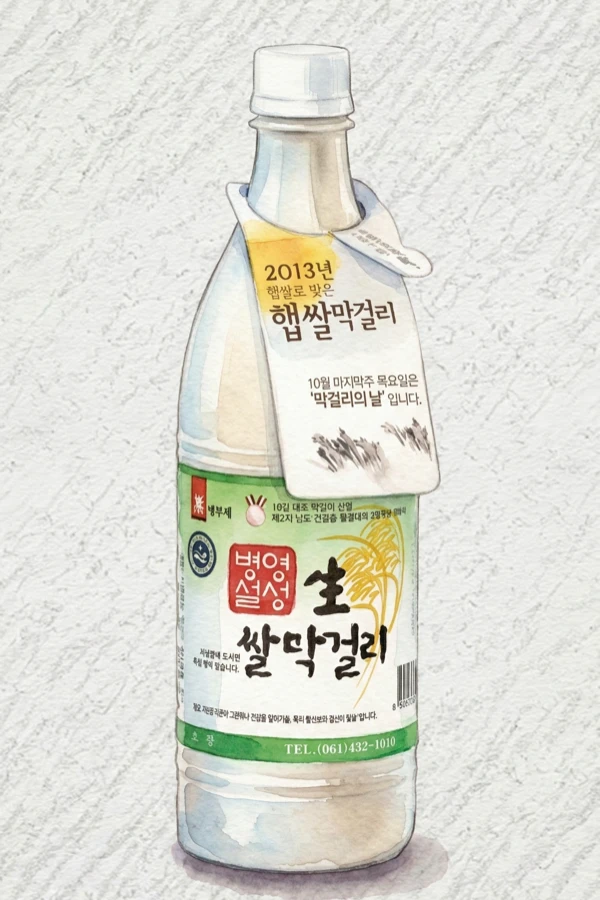
Byeongyeongseolseong Fresh Makgeolli
병영설성 생막걸리
Byeongyeong Brewery in Jeollanam-do holds a Sikpum Myeongin (Food Master) designation - one of Korea's highest artisanal honors - and channels that expertise into this fresh, unpasteurized makgeolli using domestic rice, yeast, nuruk, and purified water. The 'Byeongyeong' in the name refers to the old garrison town (Byeongyeong-seong) in the Gangjin area, linking the brew to Jeollanam-do's deep military and cultural history. At 6% ABV, the fresh (saeng) style means the yeast and bacteria remain active in the bottle, creating a living product that evolves subtly over its shelf life. The aroma is lively - newly steamed rice, a bright yeasty lift, and a subtle tang from ongoing fermentation. The first sip is creamy and gently sweet, with a fine natural effervescence from the active cultures that machine-carbonated makgeolli cannot replicate. Midpalate, the nuruk's earthy character comes through as a grounding note beneath the sweetness. The finish is moderately clean with a lingering grain warmth. Compared to pasteurized or shelf-stable makgeolli, this has more textural energy and aromatic vibrancy. Pair it with Gangjin's local specialty, hanjeongsik (multi-course Korean meal), where its adaptable profile can shift from mild banchan to grilled fish to spicy stew without missing a beat.
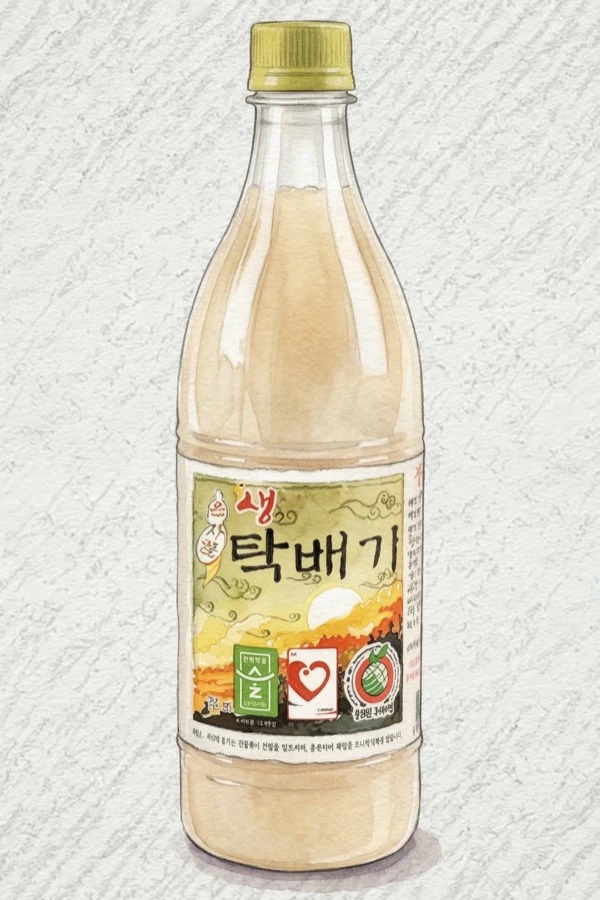
Eunjagol Fresh Tak Peargi
은자골 생 탁배기
Eunjagol Fresh Tak is a 5% ABV draft-style makgeolli from Gyeongsangbuk-do with a creamy, freshly brewed character that feels immediately approachable. Made with white rice, wheat flour, starch syrup, nuruk, and enzymes, it delivers the classic makgeolli experience - mild, slightly sweet, and texturally soft - in an unfiltered, living format. A 2016 Visit Korean Brewery designation and the 2016 Korea Woorisool Awards Grand Prize in the fresh makgeolli category confirm its quality credentials.
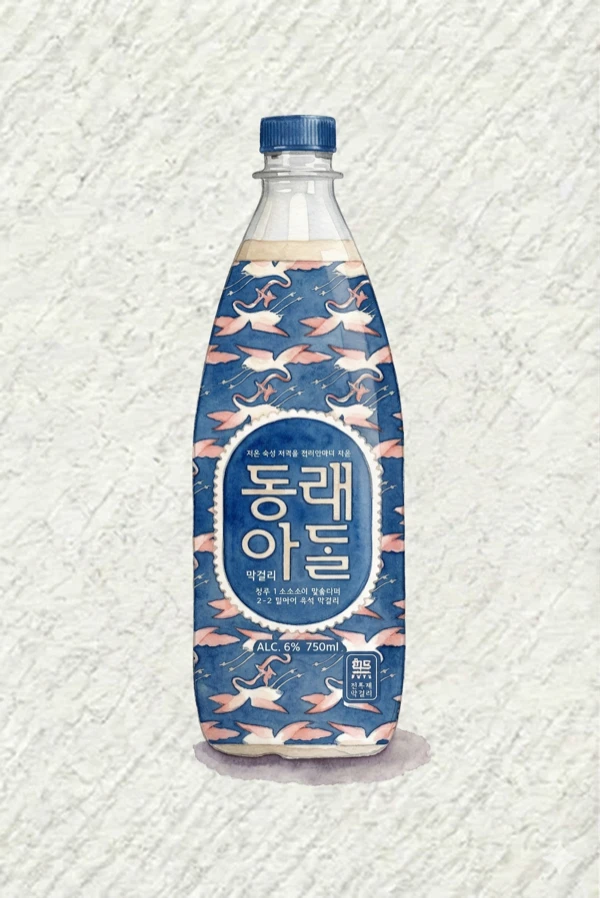
Dongnae Adeul
동래아들
Dongnae Adeul from Busan takes its name from Dongnae-gu, one of Busan's oldest neighborhoods noted for its hot springs and deep local food culture. The grain bill mixes glutinous rice (chapssal) with regular rice (maepssal), then ferments them with wheat nuruk - a combination that produces a notably thicker, stickier body than rice-only makgeolli. The glutinous rice adds a chewy, almost taffy-like sweetness to the texture, while the regular rice keeps the overall profile from becoming too dense. Wheat nuruk contributes a warm, bready fermentation note in the background. At 6%, the drinkability is high, but the mouthfeel delivers more weight than the ABV suggests. The aroma is soft grain and freshly steamed mochi with a barely-there yogurt tang. This is neighborhood-pub makgeolli - the kind shared over a platter of Dongnae pajeon, Busan's famous thick scallion pancake layered with seafood. It also pairs well with ssiat hotteok (seed-filled sweet pancakes) as a local snack-and-drink combination, or with spicy dwaeji gukbap, Busan's signature pork bone soup.
Important Disclaimer
This article is for informational purposes only and does not constitute medical advice. Alcohol consumption carries health risks regardless of the type of alcohol. If you have health concerns about drinking, consult a qualified medical professional. No amount of alcohol is considered completely safe for health.
With that clearly stated, there are genuine differences between traditional and industrial alcohol products in terms of ingredients, fermentation byproducts, and nutritional content. Understanding these differences can inform more mindful choices for those who do choose to drink.
Makgeolli and Probiotics
Unpasteurized makgeolli (생막걸리) is a live fermented beverage containing active microorganisms. Research has identified several notable characteristics:
- Lactic acid bacteria - Unpasteurized makgeolli contains Lactobacillus and other lactic acid bacteria similar to those found in yogurt and kimchi. These are the same types of organisms commonly referred to as probiotics.
- Dietary fiber - Because makgeolli retains the rice solids, it contains more dietary fiber than clear alcoholic beverages. A serving of makgeolli may contain 1-2g of fiber.
- Protein and amino acids - The fermentation process produces small amounts of protein and amino acids that are absent in distilled spirits.
- B vitamins - Fermentation generates B-complex vitamins, though the amounts are modest.
Important caveat: Pasteurized makgeolli (살균 막걸리), which has a longer shelf life, does not contain live organisms. The probiotic content only applies to fresh, unpasteurized products with short shelf lives. Additionally, any potential benefits from these components must be weighed against the well-documented harms of alcohol consumption.
Calorie Comparison Across Types
For those monitoring calorie intake, here is how Korean traditional alcohols compare:
| Drink | ABV | Calories per 100ml | Standard serving | Calories per serving |
|---|---|---|---|---|
| Makgeolli | 6% | ~56 kcal | 300ml bowl | ~168 kcal |
| Cheongju | 15% | ~100 kcal | 100ml cup | ~100 kcal |
| Fruit wine (maesil-ju) | 13% | ~120 kcal | 100ml glass | ~120 kcal |
| Traditional soju (25%) | 25% | ~160 kcal | 50ml shot | ~80 kcal |
| Commercial soju (17%) | 17% | ~80 kcal | 50ml shot | ~40 kcal |
| Beer (reference) | 5% | ~43 kcal | 350ml can | ~150 kcal |
Key takeaways: Cheongju is relatively calorie-efficient for its alcohol content. Fruit wines tend to be higher in calories due to residual sugar. Makgeolli's total calories per session depend heavily on how many bowls you drink - it is easy to consume large volumes because of its low ABV and pleasant taste.
Nuruk Fermentation and Its Byproducts
The unique nuruk fermentation process in Korean brewing creates a different set of compounds compared to industrial alcohol production:
- Complex fermentation byproducts - Because nuruk contains multiple microorganism types (molds, yeasts, bacteria), the fermentation produces a wider range of organic acids, esters, and amino acids than single-organism fermentation.
- Higher acidity - Korean traditional alcohol typically has higher organic acid content (citric, lactic, succinic, malic acids) than comparable Japanese sake. Some research suggests that these acids may slow alcohol absorption, though evidence is preliminary.
- Lower methanol - Well-made traditional soju from rice has very low methanol content compared to fruit-based spirits, since rice contains minimal pectin (the methanol precursor).
- Absence of additives - Traditional products contain no artificial sweeteners, flavorings, or preservatives that are commonly found in commercial soju and flavored alcoholic beverages.
These differences make traditionally brewed Korean alcohol a more "natural" product, but this should not be mistaken for "healthier." Alcohol itself - ethanol - is classified as a Group 1 carcinogen by the WHO regardless of what else accompanies it.
Medicinal Wines (Yakju) in Korean Tradition
Korea has a long tradition of medicinal wines - alcohol infused with herbs, roots, and other ingredients believed to have health properties. These belong to the broader category of yakju (medicinal rice wine).
- Baekse-ju (백세주) - Infused with 12 herbs including ginseng, goji berry, and licorice. The name means "100-year wine," reflecting the traditional belief that it promotes longevity.
- Insam-ju (인삼주) - Ginseng wine. Korean ginseng (Panax ginseng) has been the subject of extensive research on potential health effects, and infusing it in alcohol is a centuries-old practice.
- Ogapi-ju (오가피주) - Made with Acanthopanax (five-leaf ginseng), traditionally used in Korean herbal medicine.
- Bokbunja-ju (복분자주) - Black raspberry wine, traditionally associated with vitality and energy.
Responsible perspective: While these herbal ingredients have their own body of traditional knowledge and some scientific research, combining them with alcohol does not create a health food. The harms of alcohol consumption are not canceled by beneficial herbal ingredients. Enjoy medicinal wines for their unique flavors and cultural significance, not as health remedies.
Responsible Drinking: Practical Guidance
If you choose to drink Korean traditional alcohol, here are practical ways to minimize harm and maximize enjoyment:
- Pace yourself - Korean drinking culture encourages long, food-accompanied sessions. Use this to your advantage: eat between drinks, take breaks, and sip rather than shoot.
- Eat anju - The Korean tradition of always eating with alcohol is genuinely protective. Food slows alcohol absorption. Never drink on an empty stomach. See our food pairing guide for ideas.
- Hydrate - Alternate alcoholic drinks with water. Korean drinking culture already accommodates this - water is always served at the table.
- Know your limits - Be aware of ABV differences. Switching from makgeolli (6%) to traditional soju (40%) without adjusting your pace is a common mistake.
- Respect the right to refuse - Korean drinking etiquette is evolving. It is increasingly acceptable to decline drinks or to stop before the group.
- Avoid mixing excessively - While somaek and cocktails are part of the culture, mixing many types of alcohol in one session often leads to overconsumption.
- Never drink and drive - South Korea has strict drunk driving laws (0.03% BAC limit as of 2019). Use public transportation, designated drivers, or ride-hailing services.
Who Should Avoid Alcohol Entirely
Certain groups should not consume alcohol at all, regardless of the type:
- Pregnant or breastfeeding individuals
- People with liver disease or a history of alcohol dependency
- Anyone taking medications that interact with alcohol
- People under the legal drinking age
- Anyone who has been advised by a medical professional not to drink
- People planning to drive or operate heavy machinery
If you are unsure whether alcohol is safe for your specific health situation, consult your doctor before drinking.
Frequently Asked Questions
Is makgeolli actually good for gut health?
Unpasteurized makgeolli contains live lactic acid bacteria similar to those in yogurt. However, it also contains alcohol, which is harmful to gut health. The probiotic content does not cancel out the effects of alcohol. If gut health is your goal, yogurt or kimchi are better choices. Enjoy makgeolli for its taste, not as a probiotic supplement.
Which Korean alcohol has the fewest calories?
Per standard serving, commercial soju shots have the fewest calories (about 40 kcal per 50ml shot). However, people typically consume multiple shots. Per unit of alcohol, cheongju is relatively efficient. Makgeolli has moderate calories per 100ml but is often consumed in large volumes. The lowest-calorie approach is always to drink less.
Are traditional Korean alcohols hangover-free?
No alcohol is hangover-free. Some people report milder hangovers from traditionally brewed products compared to industrial ones, which may relate to the absence of artificial additives and the presence of organic acids. However, the primary cause of hangover is alcohol itself, and drinking traditional alcohol to excess will absolutely cause a hangover.
Can medicinal wines replace herbal supplements?
No. While medicinal wines contain herbal ingredients, the alcohol content means they come with significant downsides. If you want the benefits of ginseng, goji berry, or other herbs, consuming them in non-alcoholic forms is more effective and carries no alcohol-related risks.