What is Makgeolli? A Complete Guide to Korean Rice Wine
Makgeolli is Korea's cloudy, unrefined rice wine. Learn what it contains, how it differs from sake, and how to compare bottles by style and strength.
Quick answer
Makgeolli is a cloudy Korean fermented grain drink commonly made with rice, a fermentation starter, and water. It retains fine grain solids, usually has less alcohol than sake, and may be still or lightly sparkling depending on the bottle.
Explore next
Bottles to compare
Move from the guide to product pages with ABV, tasting notes, and producer links.
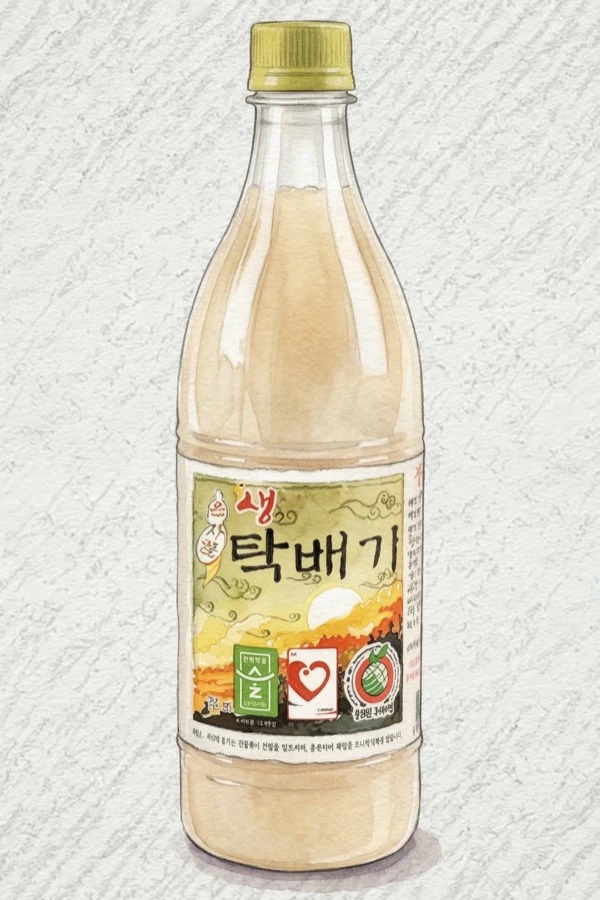
Eunjagol Fresh Tak Peargi
은자골 생 탁배기
Eunjagol Fresh Tak is a 5% ABV draft-style makgeolli from Gyeongsangbuk-do with a creamy, freshly brewed character that feels immediately approachable. Made with white rice, wheat flour, starch syrup, nuruk, and enzymes, it delivers the classic makgeolli experience - mild, slightly sweet, and texturally soft - in an unfiltered, living format. A 2016 Visit Korean Brewery designation and the 2016 Korea Woorisool Awards Grand Prize in the fresh makgeolli category confirm its quality credentials.
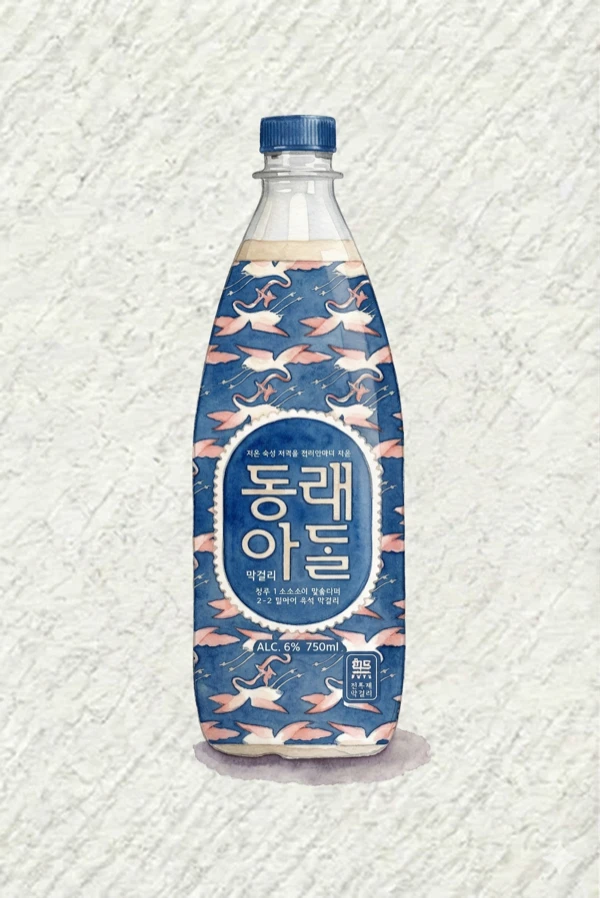
Dongnae Adeul
동래아들
Dongnae Adeul from Busan takes its name from Dongnae-gu, one of Busan's oldest neighborhoods noted for its hot springs and deep local food culture. The grain bill mixes glutinous rice (chapssal) with regular rice (maepssal), then ferments them with wheat nuruk - a combination that produces a notably thicker, stickier body than rice-only makgeolli. The glutinous rice adds a chewy, almost taffy-like sweetness to the texture, while the regular rice keeps the overall profile from becoming too dense. Wheat nuruk contributes a warm, bready fermentation note in the background. At 6%, the drinkability is high, but the mouthfeel delivers more weight than the ABV suggests. The aroma is soft grain and freshly steamed mochi with a barely-there yogurt tang. This is neighborhood-pub makgeolli - the kind shared over a platter of Dongnae pajeon, Busan's famous thick scallion pancake layered with seafood. It also pairs well with ssiat hotteok (seed-filled sweet pancakes) as a local snack-and-drink combination, or with spicy dwaeji gukbap, Busan's signature pork bone soup.
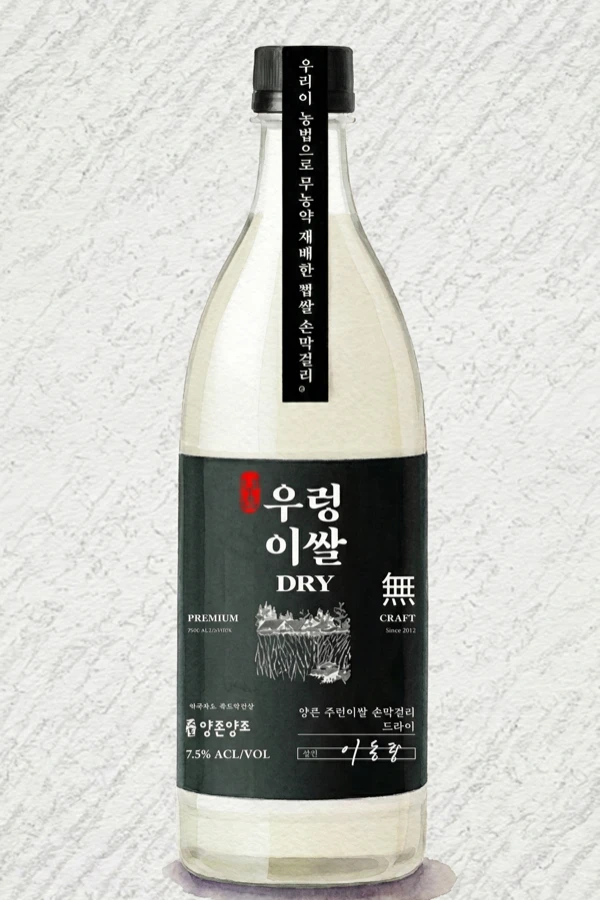
Ureongi Rice Son Makgeolli DRY
우렁이쌀 손막걸리 DRY
Ureongi Rice Son Makgeolli DRY from Chungcheongnam-do's Yangchon Brewing is named after ureongi (pond snails), referencing the eco-farming practice of using snails instead of pesticides in rice paddies - a detail that signals environmental consciousness behind the bottle. The 'DRY' designation genuinely describes the flavor direction: unlike most Korean makgeolli that lean sweet, this 7.5% bottle pulls its finish toward dryness while maintaining enough glutinous rice richness to keep the body satisfying. The combination of regular rice and glutinous rice (chapssal) with yeast and starter culture (jongguk) creates an initial creaminess on the palate that quickly transitions into a clean, dry tail. The aroma is toasted rice with a slight yeasty edge. This drier profile makes it an exceptional food-pairing makgeolli - oily jeon and fried chicken benefit enormously because the dry finish refreshes the palate instead of adding more sweetness on top of fat. It also works with kimchi jjigae where the dry edge balances the stew's saltiness. Think of it as the brut version of makgeolli: familiar in structure, but fundamentally different in how it finishes.
What is Makgeolli?
Makgeolli (막걸리), also called takju, is a Korean fermented drink that is only coarsely filtered, so fine grain material remains and gives it an opaque appearance. The Korea Tourism Organization's makgeolli overview describes the drink as a simply filtered rice or wheat brew and notes that common examples are about 4% to 6% ABV.
Rice is common, but the category can also use other grains. Strength, sweetness, acidity, carbonation, pasteurization, and ingredients vary by producer, so the bottle label is more useful than assuming every makgeolli tastes or handles the same way.
Use the makgeolli catalog to compare current products by ABV, region, ingredients, and brewery.
How Makgeolli is Made
A traditional recipe commonly combines a grain such as rice with water and nuruk. Nuruk can be made from wheat or rice and supplies microorganisms and enzymes for fermentation. Current commercial products may use cultivated starters, enzymes, sweeteners, fruit, or additional grains, so the ingredient list matters.
A general process looks like this:
- Grain preparation: Rice or another declared grain is prepared for fermentation.
- Mixing: Grain, water, and the chosen starter are combined according to the producer's recipe.
- Fermentation: Enzymes convert grain starch into sugar while yeast converts sugar into alcohol.
- Coarse filtration: The brew is strained without removing all fine solids, preserving the cloudy appearance.
- Finishing: The producer may pasteurize, dilute, carbonate, sweeten, flavor, or bottle the drink as a fresh product.
The exact sequence and ingredients differ by bottle. Use the product page and label for product-level claims.
How to Drink Makgeolli
Read the storage and opening directions first. Fresh or actively fermenting makgeolli can build pressure, so keep it cold and upright and open it slowly. Do not assume every bottle should be shaken before opening.
If the label recommends mixing the sediment, let pressure settle first, close the bottle securely, and roll or invert it gently. Pour a small chilled serving and adjust from there.
A small bowl is traditional, but a glass also works. A clear glass makes it easier to see how much sediment the bottle contains.
Classic Makgeolli Food Pairings
In Korea, drinking without food (안주, anju) is almost unthinkable, and makgeolli has some of the most iconic pairings in Korean cuisine:
- Pajeon (파전) - Green onion pancake. The classic rainy-day combination. The crispy, savory pancake complements makgeolli's gentle sweetness perfectly.
- Bindaetteok (빈대떡) - Mung bean pancake. Hearty and crispy, it's a traditional market food that goes hand-in-hand with makgeolli.
- Kimchi - Especially aged, tangy kimchi. The acidity of the kimchi matches the slight tang of well-fermented makgeolli.
- Dubu-kimchi (두부김치) - Tofu with stir-fried kimchi and pork. A substantial anju that works for a full evening of drinking.
- Korean fried chicken - A more modern pairing, but the effervescence of makgeolli cuts through the oiliness of fried food beautifully.
Explore more pairings in our food pairing guide.
Types of Makgeolli
These label clues are more useful than treating all makgeolli as one style:
- Saeng makgeolli (생막걸리): Unpasteurized. It usually requires refrigeration and may continue changing after bottling.
- Salgyun makgeolli (살균막걸리): Pasteurized for greater stability. Storage still follows the producer's label.
- Plain or flavored: Check whether fruit, herbs, other grains, sweeteners, or flavorings appear in the ingredients.
- Strength: ABV can move well beyond the familiar everyday range, especially in concentrated or premium styles.
Browse the makgeolli catalog and compare ABV and ingredients before choosing a bottle.
Do Not Treat Makgeolli as a Health Drink
Cloudiness and fermentation do not make makgeolli a probiotic or health product. Pasteurization, filtration, ingredients, storage, sugar, calories, and live microorganisms differ by bottle.
Use the nutrition and ingredient label for the product you are drinking. Makgeolli contains alcohol, so health claims should not determine the choice.
Where to Find Makgeolli in Korea
Availability changes by region and bottle. Common places to check in Korea include:
- Convenience stores and supermarkets: Useful for widely distributed bottles.
- Department store liquor sections and specialist shops: More likely to carry regional or premium products.
- Visiting breweries: Participating breweries may offer tours, tastings, or direct sales. Confirm the current program before traveling.
Outside Korea, distribution and alcohol shipping rules vary by country. The buying guide explains what to verify without promising that a specific bottle can be shipped internationally.
Frequently Asked Questions
Does makgeolli go bad?
It can spoil or change after bottling. Unpasteurized makgeolli usually requires refrigeration, while pasteurized products may be more stable. Follow the use-by date and storage directions on the bottle rather than a generic timeline.
Is makgeolli gluten-free?
Do not assume it is gluten-free. Makgeolli can use wheat-based nuruk or other gluten-containing ingredients. Only rely on an explicit gluten-free claim and the complete ingredient and allergen label.
What's the difference between makgeolli and sake?
Makgeolli is a cloudy Korean category with retained grain solids, while Japanese sake is generally clear and uses rice koji. Everyday makgeolli is usually lower in alcohol, but ingredients, carbonation, and strength vary by bottle.
Why does my makgeolli bottle have a hole in the cap?
Some unpasteurized bottles use vented caps because fermentation can continue and release carbon dioxide. Cap designs vary, so keep the bottle upright, follow its storage directions, and open it slowly.