Korean Soju Guide: Traditional vs Commercial, How to Drink
The real story behind Korea's most famous spirit. Learn the difference between traditional distilled soju and mass-produced soju, plus how to drink it properly.
Explore next
Bottles to compare
Move from the guide to product pages with ABV, tasting notes, and producer links.
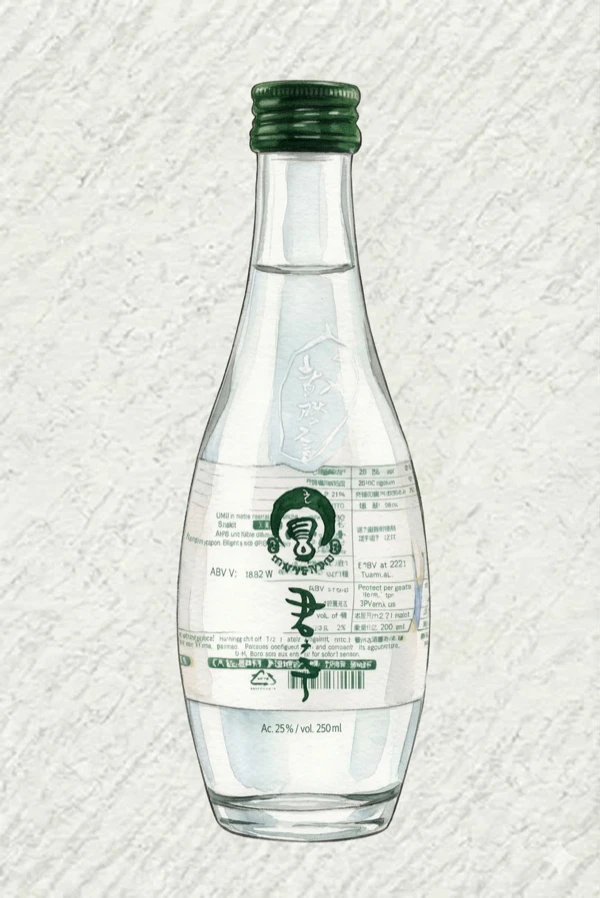
Baekje Hansan Gunju
백제한산군주
Baekjehansangunju is a 25% ABV blended spirit from Chungcheongnam-do, made with glutinous rice, water, non-glutinous rice, spirit (jujeong), yeast, red chili, gujeolcho (chrysanthemum sibiricum), fructose, salt, and stevia. This is one of the more complex ingredient lists in Korean traditional spirits, layering grain fermentation with botanical infusion. The Baekje reference ties the spirit to the ancient Korean kingdom that flourished in the Chungcheong region, while the inclusion of red chili and gujeolcho creates a flavor profile that defies simple categorization. The nose opens with warm grain sweetness from the dual rice base, a gentle floral note from the gujeolcho, and a subtle peppery warmth hinting at the red chili. On the palate, the body is light-medium with a smooth texture. The grain sweetness from glutinous and non-glutinous rice creates a familiar, comforting foundation. The red chili appears not as heat but as a gentle warming spice that adds character, while gujeolcho contributes a subtle herbal-floral layer. The added spirit rounds the proof, fructose and stevia balance sweetness, and salt integrates the flavors. The finish is moderate and clean, with lingering grain warmth and a faint herbal-spice echo. The compact 250ml bottle suits focused tasting. Serve at room temperature with traditional Korean snacks, alongside banchan where the spirit's subtle complexity adds interest, or with savory-sweet preparations where the chili and herbal notes find resonance.
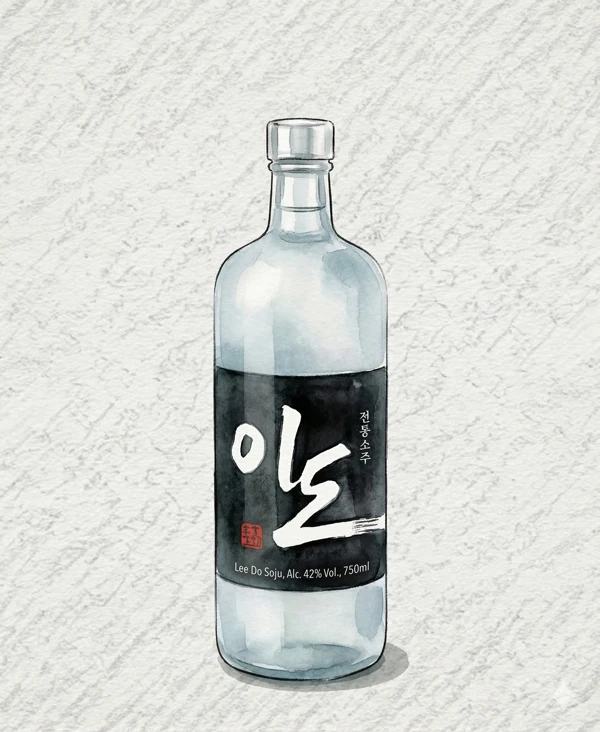
Organic Ido 42
유기농 이도 42
Yuginong Ido 42 is a 42% ABV distilled soju from Chungcheongbuk-do, made entirely from 100% organic Korean rice. The commitment to organic sourcing sets this apart in a market where most craft soju uses conventionally grown grain - it represents a deliberate choice to prioritize ingredient purity at the foundation level. The distillation process transforms the rice into a spirit of remarkable clarity, where strength and smoothness coexist in a way that defies the ABV on the label. The nose is clean and understated - polished rice grain, a faint floral-yeast note, and a mineral-like purity. On the palate, the body is medium with a surprisingly silky texture for a 42% spirit. The rice character comes through as a soft, grain-sweet warmth rather than rough heat, and the finish extends with impressive length, carrying a gentle toasted-rice whisper. The spirit won the Grand Prize in the distilled-spirit category at the 2016 Korea Traditional Liquor Awards - the highest honor, confirming its standing as a benchmark craft soju. Bottled at 375ml. Serve neat at room temperature to appreciate the full grain complexity, or slightly chilled; pairs excellently with galbi (grilled short ribs) where the spirit cuts through rich fat, bossam (boiled pork wraps), and sashimi.
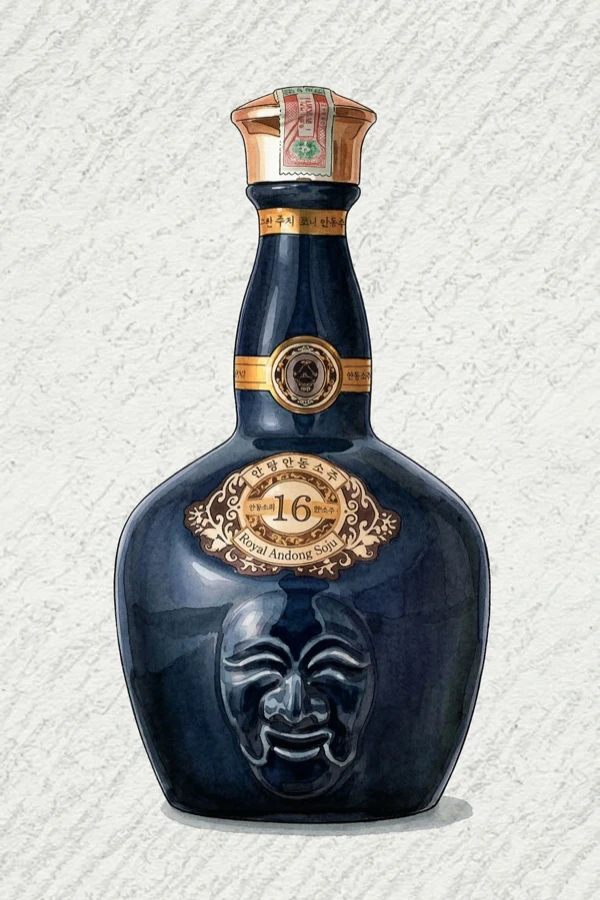
Royal Andong Soju
로얄 안동소주
Royal Andong Soju is a 45% ABV rice spirit from Gyeongsangbuk-do that carries the Andong soju name with a regal intent. Built on 100% Korean rice, it aims for elegance within strength - a spirit that commands respect through clean execution rather than aromatic fireworks. The nose is crisp and precise: a firm rice-grain character, a dry mineral edge, and a carefully managed warmth that stays disciplined at 45%. There is a faint, clean nuttiness that adds the slightest dimension. On the palate, the body is medium-full with a clean, almost crystalline texture. The rice character is the undisputed center - dry, pure, and mineral-forward, with the grain presenting as polished stone rather than soft sweetness. The mid-palate is focused and steady, with alcohol warmth distributed evenly and a subtle grain bitterness that adds definition. The finish is long and dry, with persistent mineral crispness and a clean, warming exit. The consistent recognition at the Korea Sool Awards from 2012 through 2014 speaks to disciplined quality. At 600ml, serve neat at room temperature where the mineral clarity shines, alongside bold Korean dishes like galbi, bossam, or spicy stews that need a spirit with structural authority to match.
What is Korean Soju?
Soju (소주) is Korea's national spirit and the most consumed liquor in the world by volume. But here's what most people outside Korea don't realize: the soju in those iconic green bottles at Korean BBQ restaurants is a completely different product from traditional Korean soju.
Traditional soju (전통 소주) is a craft distilled spirit made from rice, nuruk, and water - then distilled in a pot still, often aged for months or years. It typically ranges from 25% to 45% ABV and carries complex, nuanced flavors. Think of it as Korea's answer to Japanese shochu or artisanal whiskey.
Commercial soju (희석식 소주), on the other hand, is an industrial product made by diluting ethanol derived from tapioca or sweet potatoes with water, then adding sweeteners and flavorings. It usually sits at 16-20% ABV. This is what most people worldwide know as "soju."
Korean Sool catalogs 248 traditional soju varieties - every one of them a world apart from the commercial bottles.
The History of Soju
Soju's story begins in the 13th century, when Mongol invaders brought distillation technology to the Korean Peninsula. The Mongols had learned distillation from the Persians (who called it "arak"), and Korean brewers quickly adapted the technique to distill their existing rice wines.
The city of Andong in Gyeongsang Province became one of the earliest and most famous soju-producing regions - Andong Soju remains a prized traditional brand today. For centuries, each region developed its own distinctive soju style based on local ingredients and techniques.
Everything changed in 1965, when the Korean government banned the use of rice for alcohol production to preserve grain supplies. Distillers were forced to use cheap alternatives like sweet potatoes and tapioca starch, and the diluted soju that dominates today was born out of necessity, not tradition. The ban was lifted in 1999, but by then the commercial product had become culturally entrenched.
The good news: since the early 2000s, traditional soju has been experiencing a renaissance. Small distillers across Korea are reviving centuries-old recipes, and consumer interest in craft spirits is growing rapidly.
Traditional Soju vs Commercial Soju
Understanding the differences helps you appreciate what traditional soju really is:
| Traditional Soju | Commercial Soju | |
|---|---|---|
| Base | Rice, nuruk, water | Diluted ethanol (tapioca/sweet potato) |
| Production | Brewed then distilled (pot still) | Industrial ethanol + water + additives |
| ABV | 25-45% | 16-20% |
| Flavor | Complex, grain-forward, aromatic | Clean, neutral, slightly sweet |
| Price | ₩15,000-₩100,000+ | ₩1,500-₩5,000 |
| Aging | Often aged months to years | No aging |
If you've only ever had commercial soju, trying a quality traditional soju for the first time is a revelation. The depth and complexity are incomparable.
How to Drink Traditional Soju
Traditional soju deserves more respect than shooting it from a shot glass. Here's how to get the most from it:
- Temperature - Room temperature or slightly chilled (15-18°C). Too cold mutes the complex aromas. Some aged sojus actually benefit from being slightly warmed.
- Glassware - Small ceramic cups (잔, jan) are traditional. A tulip-shaped glass works well too, concentrating the aromas. Avoid large glasses - soju is meant to be sipped in small portions.
- Pace - Sip slowly. Traditional soju at 40%+ is a sipping spirit, not a shooter. Let it coat your palate and notice how the flavor evolves.
- Water - It's perfectly acceptable to add a splash of water to high-proof soju. This can open up hidden flavors, similar to adding water to whisky.
For commercial soju, the drinking culture is different - shots, mixed drinks, and soju bombs (somaek, 소맥 = soju + beer) are all common and perfectly fine.
Food Pairings for Soju
Traditional soju's clean, intense character pairs beautifully with bold Korean flavors:
- Galbi (갈비) - Grilled short ribs. The smoky, caramelized meat meets soju's clean burn. Perhaps the most satisfying Korean BBQ pairing.
- Bossam (보쌈) - Steamed pork belly wrapped in cabbage with fermented shrimp paste. The richness of the pork demands soju's palate-cleansing power.
- Hoe (회) - Raw fish (Korean-style sashimi). The clean spirit enhances the delicate fish flavors without overwhelming them.
- Jokbal (족발) - Braised pig's feet. The collagen-rich, savory meat paired with soju is a late-night Seoul classic.
- Samgyeopsal (삼겹살) - Grilled pork belly. The fatty meat and sharp soju are a match made in Korean dining heaven.
Notable Traditional Soju Brands
If you're ready to explore traditional soju, here are some widely respected names:
- Andong Soju (안동소주) - The most historically significant. Made in Andong since the Goryeo Dynasty. Rich, slightly sweet, with a long finish.
- Hwayo (화요) - Modern premium soju available in multiple proof levels (17%, 25%, 41%, 53%). Accessible entry point for newcomers.
- Munbaeju (문배주) - Intangible Cultural Heritage No. 86-1. A wheat and millet soju with a distinctive pear-like aroma (despite containing no pears).
- Leegangju (이강주) - A soju infused with pear, ginger, turmeric, and cinnamon. Complex and warming.
Browse all 248 traditional soju varieties in our database.
Frequently Asked Questions
Is soju stronger than vodka?
Commercial soju (16-20% ABV) is much weaker than vodka (typically 40%). Traditional soju (25-45% ABV) is comparable to or slightly weaker than vodka. However, comparing them is like comparing craft whiskey to rubbing alcohol - they're fundamentally different products.
Why is commercial soju so cheap?
Commercial soju is made by diluting industrial ethanol (often from imported tapioca starch) with water and adding sweeteners. The production cost is extremely low. Traditional soju, which requires actual brewing and distillation, costs 10-50x more.
What does soju taste like?
Commercial soju tastes clean and slightly sweet with a mild alcohol burn. Traditional soju is completely different - expect rice or grain flavors, floral aromatics, sometimes fruity or nutty notes, and a smoother, more complex finish despite higher alcohol content.
Can soju be aged?
Traditional soju can absolutely be aged, and many premium varieties are. Aging in earthenware crocks (옹기) or oak barrels mellows the spirit and develops deeper flavors. Some distillers age their soju for 3-5 years or more. Commercial soju is not aged.