How Korean Traditional Alcohol Is Made: Brewing Guide
The complete guide to Korean traditional brewing. Learn about nuruk, rice preparation, fermentation, distillation, filtration, and the difference between traditional and modern methods.
Explore next
Bottles to compare
Move from the guide to product pages with ABV, tasting notes, and producer links.
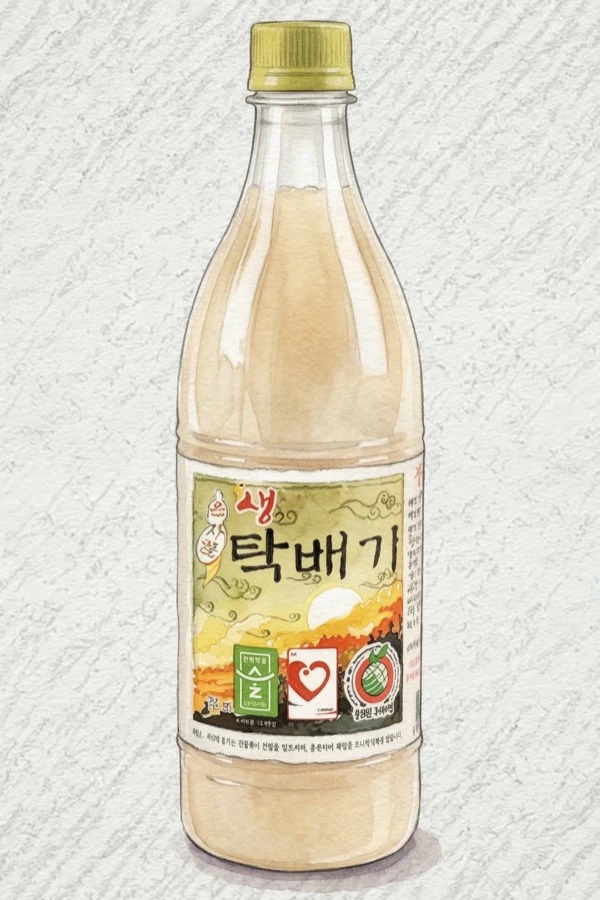
Eunjagol Fresh Tak Peargi
은자골 생 탁배기
Eunjagol Fresh Tak is a 5% ABV draft-style makgeolli from Gyeongsangbuk-do with a creamy, freshly brewed character that feels immediately approachable. Made with white rice, wheat flour, starch syrup, nuruk, and enzymes, it delivers the classic makgeolli experience - mild, slightly sweet, and texturally soft - in an unfiltered, living format. A 2016 Visit Korean Brewery designation and the 2016 Korea Woorisool Awards Grand Prize in the fresh makgeolli category confirm its quality credentials.
Hwangjiniju
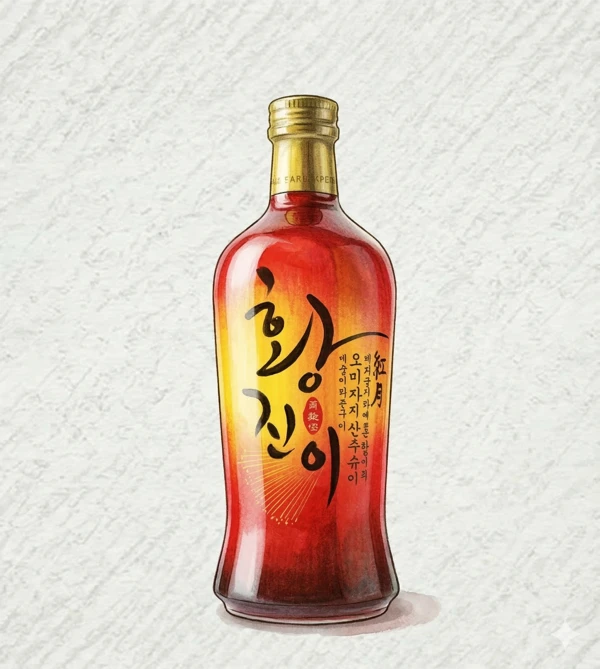
황진이주
Hwangjiniju is a 13% ABV cheongju from Sulsori Brewery in Jeollabuk-do, built on domestic omija (five-flavor berry) and cornelian cherry (sansuyu) rather than a conventional rice-only base. The omija is the star - it introduces a layered, shifting flavor profile that cycles through sweet, sour, salty, bitter, and pungent notes in a single sip, a sensory experience unique to this Korean berry. The nose opens with tart berry and warm cornelian cherry, creating a ruby-hued aroma profile. On the palate, the body is medium and polished, with the five-flavor complexity threading elegantly through each sip. The finish is moderate and clean, with a lingering berry-fruit warmth. Winner of the 2012 and 2013 Korea Traditional Liquor Awards (Excellence and Grand Prize respectively) plus 2014 Monde Selection recognition. Serve at 8-11°C with hoe where the berry tartness plays against the sesame oil, or alongside hanjeongsik where the five-flavor complexity enhances each course.
Organic Ido 42
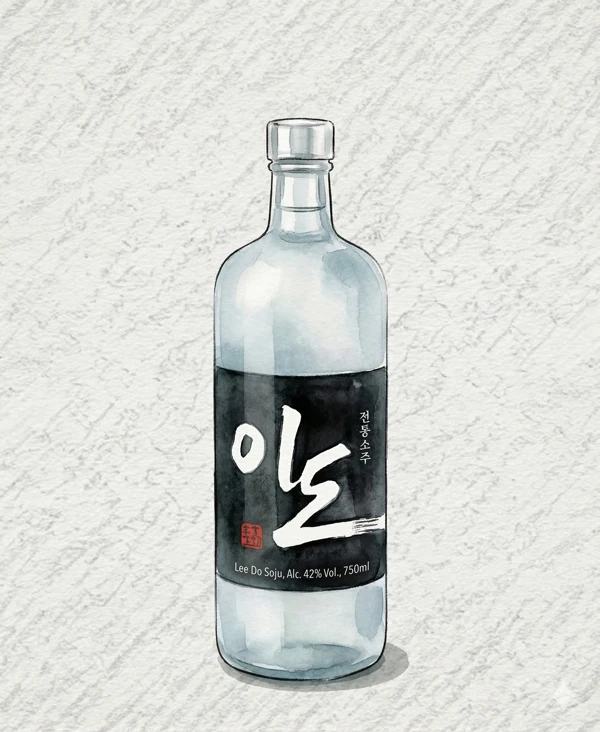
유기농 이도 42
Yuginong Ido 42 is a 42% ABV distilled soju from Chungcheongbuk-do, made entirely from 100% organic Korean rice. The commitment to organic sourcing sets this apart in a market where most craft soju uses conventionally grown grain - it represents a deliberate choice to prioritize ingredient purity at the foundation level. The distillation process transforms the rice into a spirit of remarkable clarity, where strength and smoothness coexist in a way that defies the ABV on the label. The nose is clean and understated - polished rice grain, a faint floral-yeast note, and a mineral-like purity. On the palate, the body is medium with a surprisingly silky texture for a 42% spirit. The rice character comes through as a soft, grain-sweet warmth rather than rough heat, and the finish extends with impressive length, carrying a gentle toasted-rice whisper. The spirit won the Grand Prize in the distilled-spirit category at the 2016 Korea Traditional Liquor Awards - the highest honor, confirming its standing as a benchmark craft soju. Bottled at 375ml. Serve neat at room temperature to appreciate the full grain complexity, or slightly chilled; pairs excellently with galbi (grilled short ribs) where the spirit cuts through rich fat, bossam (boiled pork wraps), and sashimi.
The Three Essential Ingredients
Every Korean traditional alcohol begins with just three ingredients:
- Rice (쌀) - The starch source. Different rice varieties (non-glutinous, glutinous, brown) produce different flavor profiles. The rice must be washed, soaked, and steamed - never boiled - to properly gelatinize the starch.
- Nuruk (누룩) - The fermentation starter. This is the single most important difference between Korean and Japanese brewing. Nuruk is a wheat cake inoculated with a complex community of wild molds, yeasts, and bacteria. It provides both the enzymes to convert starch to sugar and the yeast to convert sugar to alcohol - all in one package.
- Water (물) - Quality matters enormously. Traditional brewers prize clean, mineral-rich spring water. The mineral content influences fermentation speed and final flavor.
Some recipes add supplementary ingredients - herbs, flowers, fruits, honey - but rice, nuruk, and water are the universal foundation.
Nuruk vs Koji: The Core Difference
Understanding nuruk is the key to understanding Korean brewing:
| Nuruk (Korean) | Koji (Japanese) | |
|---|---|---|
| Base grain | Wheat (sometimes barley) | Rice |
| Microorganisms | Mixed wild culture: Aspergillus, Rhizopus, wild yeasts, lactic acid bacteria | Single pure culture: Aspergillus oryzae |
| Shape | Large flat discs or blocks | Loose grain covered in mold |
| Flavor impact | Complex, earthy, higher acidity, broader flavor range | Clean, refined, lower acidity |
| Production | Shaped and left to inoculate naturally over weeks | Steamed rice inoculated with pure mold spores over 48 hours |
Because nuruk contains a diverse microbial community, no two batches are exactly alike. This natural variation is part of what gives Korean traditional alcohol its distinctive, terroir-like character. Each brewer's nuruk is different, and nuruk quality is the single biggest factor in final alcohol quality.
For a detailed comparison with Japanese sake, see our rice wine vs sake guide.
Step-by-Step Brewing Process
The core Korean brewing process follows these steps:
- Washing and soaking (세미, 침지) - Rice is washed repeatedly until the water runs clear, then soaked for 2-12 hours depending on the rice type. This hydrates the grain evenly.
- Steaming (증자) - The soaked rice is steamed (never boiled) in a traditional steamer (시루). Steaming gelatinizes the starch without making the rice mushy, creating the ideal texture for nuruk enzymes to work.
- Cooling (냉각) - Steamed rice is spread out and cooled to about 25-30 degrees C. If it is too hot, it will kill the microorganisms in the nuruk.
- Mixing (혼합) - Cooled rice, crumbled nuruk, and water are combined in a fermentation vessel - traditionally an onggi (옹기, earthenware crock). The ratio of rice to nuruk to water varies by recipe but typically falls around 10:1:10 by weight.
- Fermentation (발효) - The mixture ferments for 7 to 30 days. During this time, two processes happen simultaneously: nuruk enzymes break starch into sugar (saccharification) while yeasts convert sugar to alcohol (alcoholic fermentation). This "parallel fermentation" is unique to East Asian brewing and enables higher alcohol content than Western beer-style sequential fermentation.
- Straining / Pressing (거르기 / 압착) - The fermented mash is strained to separate liquid from solids. Coarse straining produces makgeolli; fine pressing through cloth produces cheongju.
Multi-Step Brewing (Stages)
Many premium Korean traditional alcohols use a multi-step fermentation called "deotseul" (덧술, literally "additional brew"):
- Single brew (단양주) - Everything goes in at once. Simplest method. Used for everyday makgeolli.
- Two-step (이양주) - An initial starter (밑술, mitsul) ferments for 3-5 days, then a second addition of rice and water is made. The active starter accelerates the second fermentation and produces a cleaner, more complex result.
- Three-step (삼양주) - Three successive additions. Produces even higher alcohol and more refined flavors. Many high-end yakju and cheongju use this method.
Each additional step adds labor and time but yields progressively more complex, higher-alcohol, and smoother results. The finest traditional Korean alcohols use three or more brewing stages.
Distillation for Soju
Traditional soju is produced by distilling the fermented rice mash (or sometimes the pressed cheongju):
- Pot still (소줏고리) - The traditional Korean still is called sojutgori. It sits on top of a cauldron containing the mash. Steam rises through the mash, carrying alcohol vapor, which condenses in a water-cooled basin above. The condensed liquid is soju.
- Single distillation - Most traditional soju is distilled only once, preserving more grain flavor and character from the original fermentation. This contrasts with vodka or neutral spirits, which are distilled multiple times for purity.
- ABV range - Single pot distillation typically yields 25-45% ABV, depending on how the distillation is managed.
- Aging (optional) - Some distillers age their soju in onggi crocks or oak barrels for months or years, developing smoother, more complex flavors.
This process is entirely different from commercial (diluted) soju, which starts with industrially produced ethanol and simply adds water and flavoring.
Filtration for Cheongju
The filtration step is what separates cheongju (clear rice wine) from makgeolli:
- Pressing (압착) - The fermented mash is placed in a cloth bag and pressed. The clear liquid that flows through is cheongju. The cloudy residue left in the bag becomes makgeolli when mixed with water.
- Settling (침전) - After pressing, cheongju may be left to settle further. Fine particles slowly drop to the bottom over days or weeks.
- Fine filtration (정제) - Some producers use additional filtration for crystal clarity. Others prefer a slightly hazy "raw" cheongju (생주, saengju) that retains more flavor complexity.
The pressing method directly affects quality. Gentle, slow pressing extracts cleaner liquid. Aggressive pressing extracts more volume but introduces bitter compounds from the lees.
Modern vs Traditional Methods
Modern Korean brewing has introduced several changes to the traditional process:
| Aspect | Traditional | Modern |
|---|---|---|
| Nuruk | Hand-made, wild-inoculated | Sometimes lab-cultured or supplemented with commercial yeast |
| Vessel | Onggi (earthenware) | Stainless steel tanks |
| Temperature | Ambient, seasonal | Climate-controlled |
| Consistency | Batch variation expected | Highly consistent |
| Time | Weeks to months | Optimized for speed (sometimes days) |
| Scale | Small batch, artisan | Large volume production possible |
Neither approach is inherently better. Traditional methods produce more character and variation; modern methods produce more consistency and scale. Many of the best contemporary Korean brewers blend both - using traditional nuruk and recipes in modern, temperature-controlled facilities.
Frequently Asked Questions
Can I brew Korean traditional alcohol at home?
The process is straightforward in principle: steam rice, mix with nuruk and water, ferment for 1-2 weeks, strain. The challenge is sourcing quality nuruk (available from Korean specialty shops or online). Home brewing for personal consumption is legal in Korea (not for sale). Check your local laws if you are outside Korea.
What makes nuruk different from yeast?
Commercial yeast is a single organism (Saccharomyces cerevisiae) that only converts sugar to alcohol. Nuruk contains both enzymes (from molds) that break starch into sugar AND yeasts that convert sugar to alcohol, plus lactic acid bacteria that add acidity and complexity. It is an entire ecosystem in a wheat cake.
Why is rice steamed rather than boiled?
Boiling makes rice too wet and sticky, creating a dense mass that nuruk enzymes cannot penetrate evenly. Steaming gelatinizes the starch while keeping each grain relatively dry and separate. This allows uniform enzyme access and better fermentation.
How long does the brewing process take?
A simple single-brew makgeolli can be ready in 7-10 days. A two-step yakju takes 2-3 weeks. A three-step premium cheongju may take 4-6 weeks of fermentation plus additional weeks of settling and aging. Traditional soju adds distillation time, and some are aged for months or years.